Dr. Georgine Nanos pioneered the world's first one-day TMS protocol with physician-led care. Real reviews reveal why patients choose Kind Minds TMS in Encinitas, CA.
The best TMS clinic for treatment-resistant depression offers one-day protocols with physician-led aftercare—not 6-week programs that disrupt your life.
The KIND One-Day TMS Protocol achieved 88% response rates and 72% remission in published research. Read the data, methodology, and what it means for treatment-resistant depression.
Dr. Georgine Nanos is a board-certified family physician who pioneered the KIND One-Day TMS Protocol. Learn her story, credentials, and why she's redefining mental healthcare.
Not all TMS providers are equal. Here's exactly what to look for, what questions to ask, and the red flags that should send you elsewhere—from a physician who pioneered one-day TMS.
If anxiety medications have left you sedated, blunted, or dependent, TMS offers a different path. Learn how TMS targets the root neuroscience of anxiety—without side effects.
Read one patient's honest journey from TMS skeptic to believer. Learn what it's like to try TMS after years of medication failure and finally find relief.
Find out if you're a good candidate for TMS therapy. Learn about ideal candidates, contraindications, and what to consider before treatment. Take our informal self-assessment.
TMS therapy has one of the strongest safety profiles in psychiatry. Learn about real side effects, seizure risk (0.01%), and why 5+ million treatments have been delivered safely worldwide.
If antidepressants haven't worked after years of trying, you're not broken. The STAR*D trial shows only 37% achieve remission with the first medication. There are better options.
Someone told me last week that her doctor said her brain was "just wired this way."
Like she should make peace with it and move on.
Your brain is not a fixed machine you were handed at birth and have to live with. It's more like a muscle.
It strengthens with the right stimulation. It weakens with neglect. It adapts with repetition. It rebuilds when it's supported.
That's neuroplasticity. Your brain is never too old. Never too damaged. Never too far gone.
I've watched patients in their 70s come back to themselves after 40 years of depression. I've watched a stroke patient regain motor function everyone said was lost. I've watched a kid who hadn't made eye contact in years ask his mom how her day was.
That's not magic. That's a brain doing what brains were built to do, when you finally give it the support it's been waiting for.
If you've been told your brain is broken, or that this is just how it is for you now, I want you to hear this: that's not the end of the story. It's just the part nobody told you was rewritable.
We're here. We're always here. Send us a message and we'll walk you through what's possible. 🧠
If your body tenses the second you walk into your bedroom, you're not imagining it.
You've been conditioned.
Not by anything you did wrong. By what your brain has learned. Months, maybe years, of tossing, crying, panic at 2am, scrolling until your eyes burned, staring at the ceiling while the rest of the house slept, your brain was paying attention the whole time. And it filed away a pattern.
Bed = danger. Bed = struggle. Bed = the place I lose the fight.
So now the moment you walk in, your amygdala lights up. Your heart rate climbs. Your muscles brace. Your thoughts start their nightly sprint. And you wonder what's wrong with you.
Nothing is wrong with you.
This is contextual conditioning — a well-documented neurological pattern where the brain pairs an environment with a threat response. It's the same mechanism that makes a dog flinch at a leash after a rough walk. Your brain is not broken. It's been doing exactly what it's wired to do: learn from repeated experience and protect you from it next time.
Here's the part no one tells you: conditioning is reversible.
Your brain is an organ of neuroplasticity. It can unlearn the association. It can relearn that your bedroom is safe. It can remember what rest feels like.
You are not afraid of sleep. You've been trained by your own suffering.
And that can be retrained.
If this is your nightly reality and you're ready to teach your brain a new pattern, DM us or text us! We are here to help you reset 🧠💙
There's a specific moment in recovery we wish more people knew about.
It's not the day the fog lifts. It's not the day your energy returns. It's the night your brain finally decides you're safe enough to sleep.
For so long, your nervous system has been on watch. Guarding. Scanning. Anticipating. That's what a brain does when it's been living in survival mode — whether the threat was a bad marriage, a brutal career, postpartum hormones, or a childhood that never quite felt steady. The brain doesn't forget. It protects.
Then something shifts. The amygdala quiets. Cortisol resets. Muscles release. Breath deepens.
And sleep comes back. Not the fragile, pill-assisted version. The real thing.
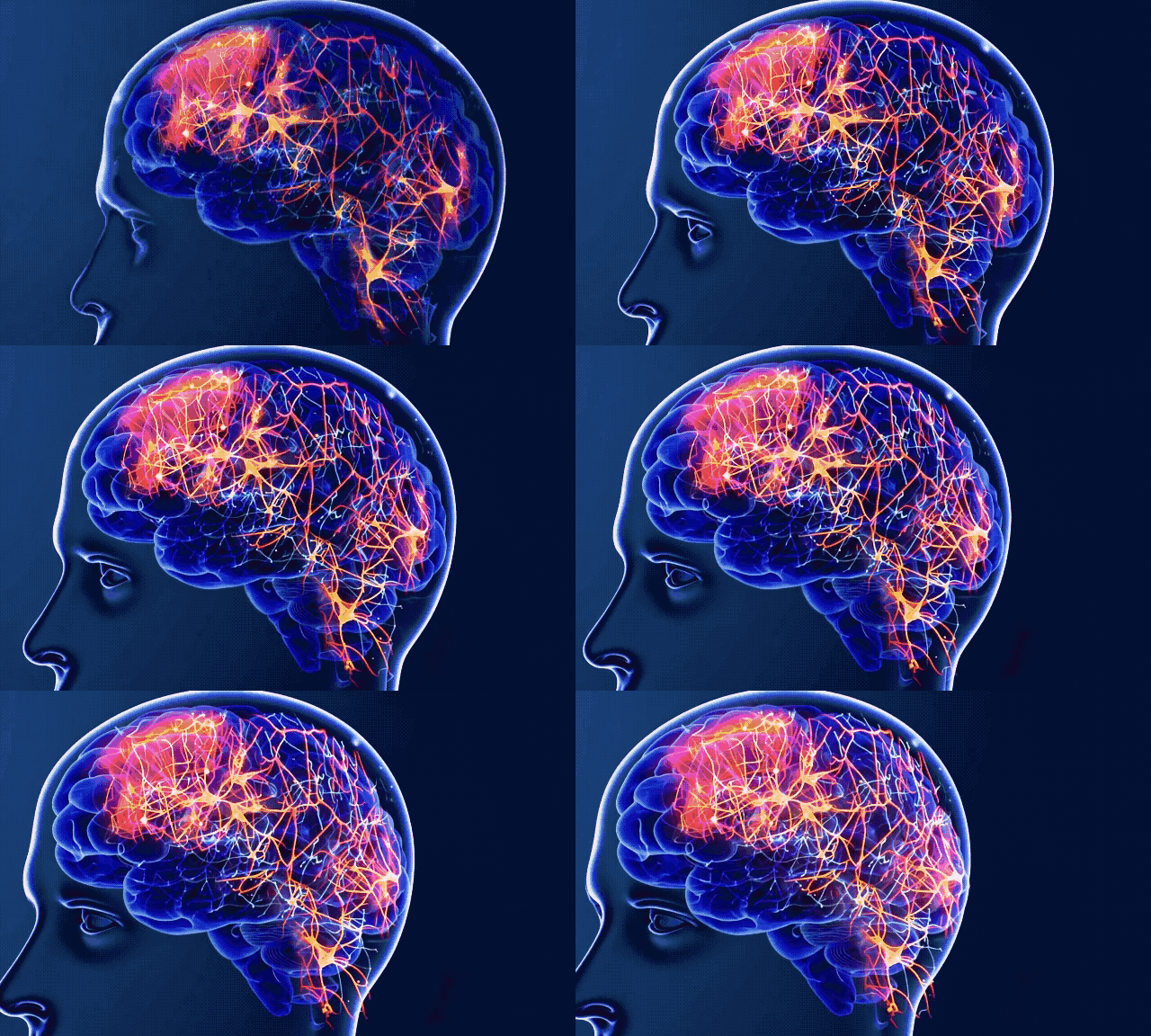
This is neuroplasticity in action, the brain's ability to rewire, re-regulate, and remember what safety feels like. It's not a miracle. It's biology. And it's absolutely possible.
If you've forgotten what rested feels like, you're not alone. And you're not beyond it.
kindmindtms.com
That 'zombie' feeling on antidepressants isn't in your head — it's called emotional blunting, and it affects up to 60% of SSRI users.
The medication is doing exactly what it's designed to do: dampening ALL emotions, not just the negative ones.
Switching between SSRIs rarely fixes this because they all work the same way, flooding your entire brain with serotonin.
TMS offers a different approach: targeted magnetic stimulation that restores natural brain function without the systemic effects of medications.
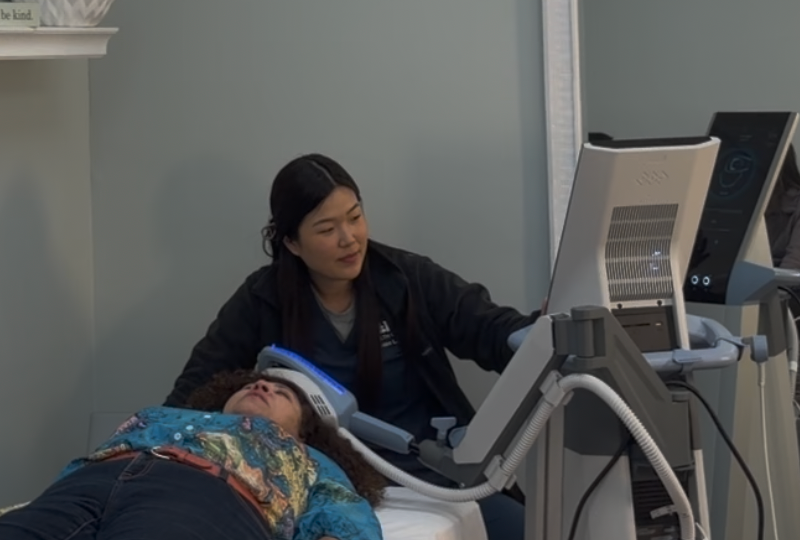
Our KIND One-Day TMS Protocol delivers what traditionally takes 6-7 weeks in a single day, backed by a full year of physician care.
You didn't fail the medications. The medications failed you.