Is TMS Therapy Safe? Side Effects, Risks & What the Research Actually Shows
Everything to know about the safety of TMS
Who Should NOT Have TMS
TMS is safe for most people, but not everyone. We carefully screen every patient, and certain conditions are contraindications:
Absolute Contraindications:
- Metal implants in or near the head (cochlear implants, deep brain stimulators, aneurysm clips, metal plates)
- Active seizure disorder or epilepsy
- History of seizures from any cause
Dental work is generally fine. Fillings, crowns, braces, and dental implants don't interfere with TMS and aren't a safety concern.
Relative Considerations:
- Certain neurological conditions
- Some cardiac devices (evaluated case by case)
- Pregnancy (actually, TMS is often preferred during pregnancy when medication isn't safe)
This is exactly why we do thorough medical screening before starting anyone on treatment. We want TMS to work for you, and that starts with making sure it's safe for your specific situation.
Special Populations: Where TMS Safety Really Shines
Pregnant Women — This is a population I'm especially passionate about. Depression during pregnancy is serious, but many women can't safely take antidepressants. TMS offers a medication-free option that doesn't cross the placental barrier or affect the developing baby.
Older Adults — The lack of cognitive side effects makes TMS particularly valuable for elderly patients, many of whom can't tolerate medication side effects or ECT-related memory impairment.
Teenagers — Emerging research supports TMS safety in adolescents. For teens who haven't responded to therapy and whose parents are concerned about long-term medication effects, TMS offers an alternative.
Patients on Multiple Medications — Because TMS doesn't interact with other drugs, it's often the only viable option for patients already managing complex medication regimens.
Real Safety Is Functional Safety
Here's something I think about a lot: in medicine, we often talk about "clinical safety"—meaning the treatment won't kill you or cause organ damage. But for mental health treatments, we need a broader concept.
Functional safety asks different questions:
- Can you function normally after treatment?
- Can you drive, work, parent, create?
- Will this treatment impair your relationships, your libido, your memory, your ability to feel joy?
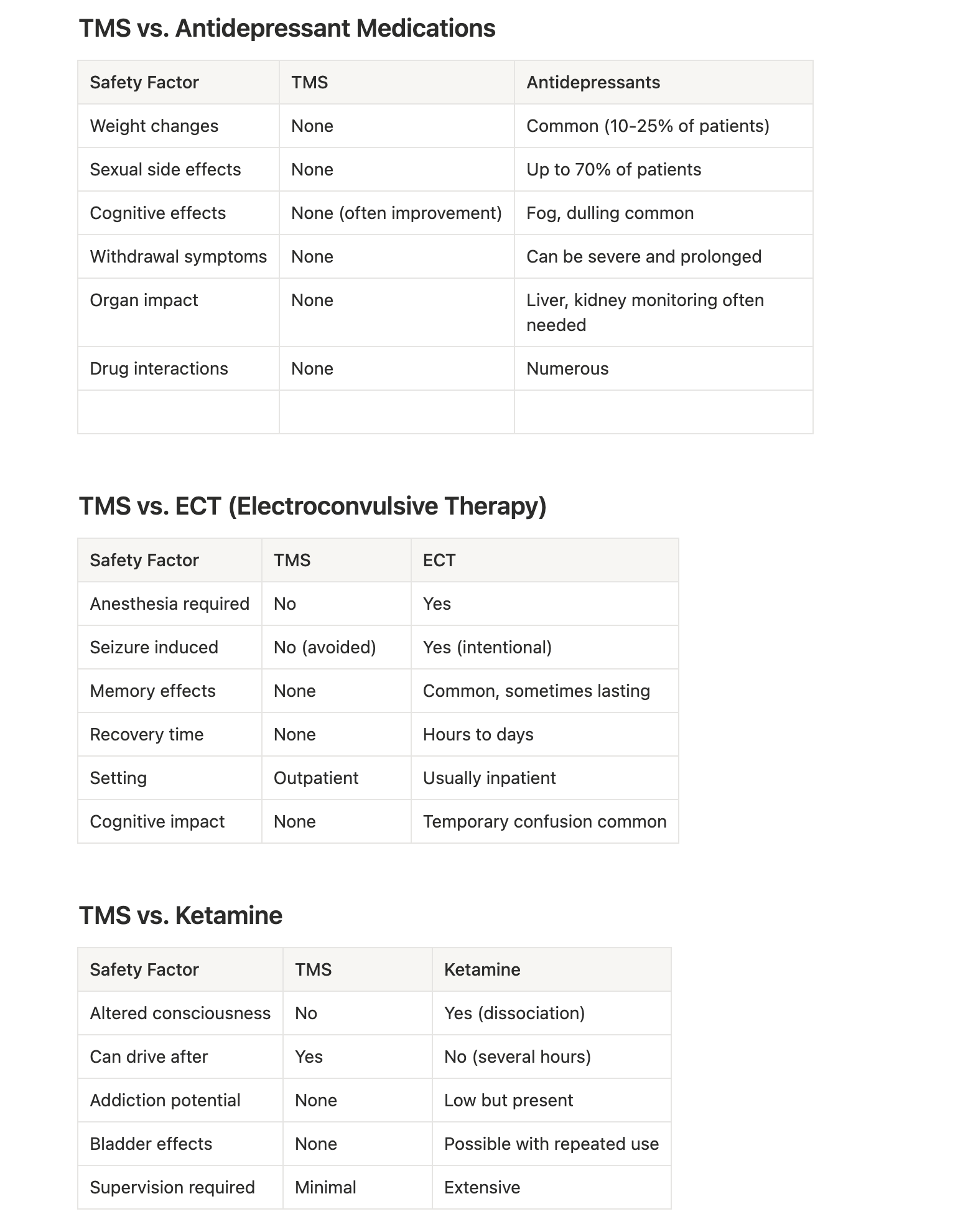
By these measures, TMS isn't just "safe." It's arguably the safest effective treatment we have for mood disorders.
It restores sleep instead of disrupting it.
It sharpens cognition instead of dulling it.
It elevates mood without altering consciousness.
It builds resilience instead of creating dependency.
The Research Behind TMS Safety
This isn't guesswork. TMS safety has been studied extensively:
- 65+ randomized controlled trials on TMS for depression alone
- Millions of treatments delivered worldwide since FDA clearance
- Long-term follow-up studies showing no delayed adverse effects
- Meta-analyses consistently confirming the favorable safety profile
The FDA cleared TMS after rigorous review. Since then, additional indications have been added (OCD in 2018, anxious depression and smoking cessation in 2020) as the evidence base has grown.
Frequently Asked Questions About TMS Safety
Does TMS hurt?
Most patients describe TMS as unusual but tolerable—a tapping or clicking sensation on the scalp. Any discomfort typically decreases after the first few sessions as you acclimate to the treatment.
Can TMS damage your brain?
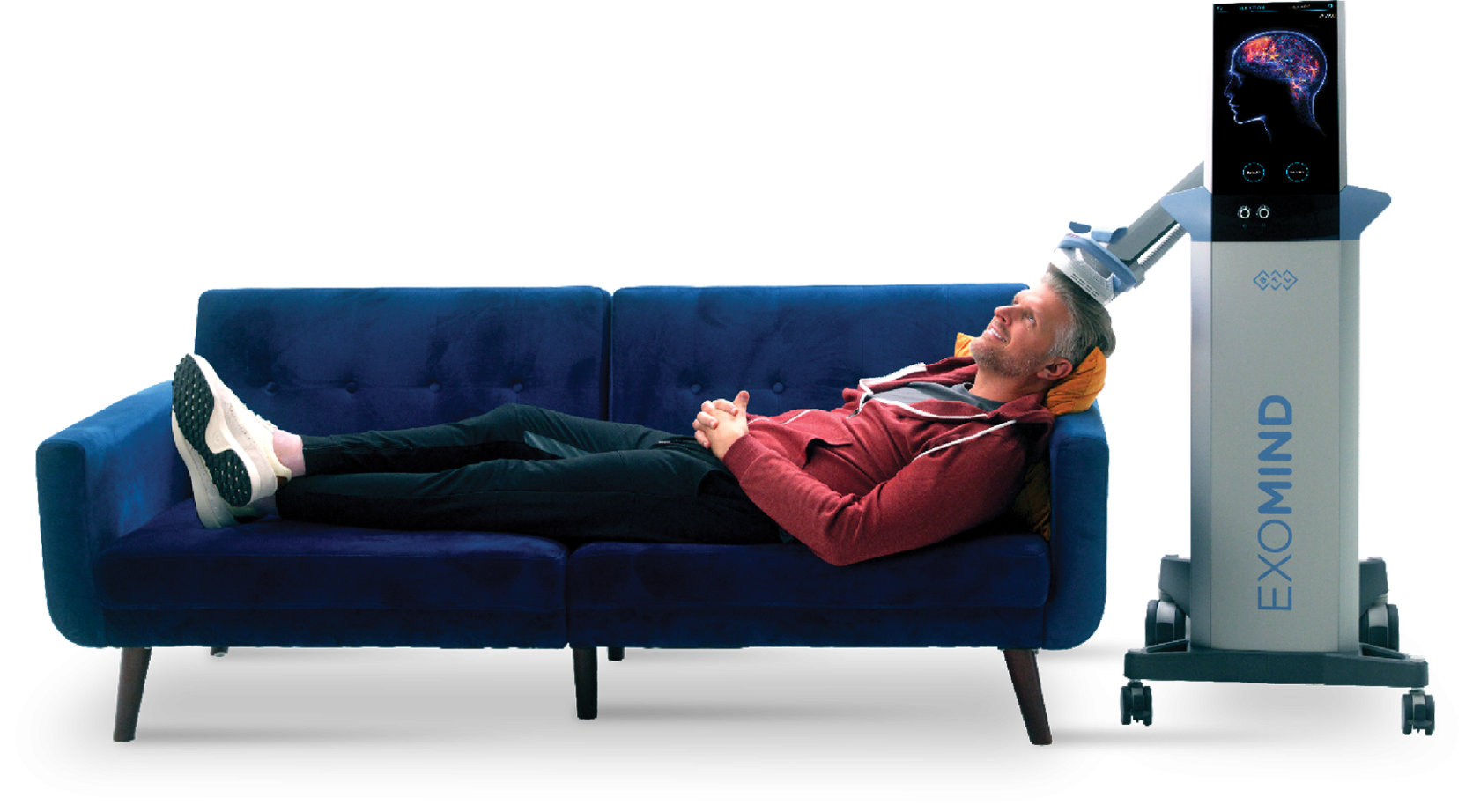
No. TMS uses magnetic fields similar in strength to an MRI machine. Unlike electroconvulsive therapy, it doesn't induce seizures or require anesthesia. Studies show no structural brain changes from TMS treatment.
Are TMS side effects permanent?
No. The common side effects (headache, scalp discomfort) are temporary and typically resolve within hours. There are no known long-term or permanent side effects from TMS.
Can you drive after TMS treatment?
Yes. You can drive yourself to and from appointments and return to all normal activities immediately after treatment. There's no sedation or impairment.
Is TMS safer than antidepressants?
In terms of side effect profile, yes. TMS causes no systemic side effects (weight gain, sexual dysfunction, GI issues) and has no withdrawal syndrome. The seizure risk is comparable to or lower than many common antidepressants.
The Bottom Line on TMS Safety
After years of delivering TMS and watching patients who had given up on treatment finally find relief, here's what I believe:
The biggest risk with TMS isn't the treatment itself—it's waiting too long to try it.
While you're cycling through medication after medication, dealing with side effects that compromise your quality of life, years pass. Relationships suffer. Careers stall. Life happens in a fog.
TMS offers something rare in psychiatry: a treatment that works without taking something else away. You get relief. You don't sacrifice yourself to get it.
Ready to Learn More?
At Kind Minds, we take safety seriously—starting with a thorough evaluation to ensure TMS is right for your specific situation. Our physician-led team will answer your questions honestly and help you make an informed decision.
Schedule Your Complimentary Consultation →
Medical Disclaimer: This content is for informational purposes only and does not constitute medical advice. Individual results vary. Always consult with a qualified healthcare provider before starting any treatment.

Meet the Author
Dr. Georgine Nanos, MD, MPH
Founder of Kind Health Group