How Does TMS Work?
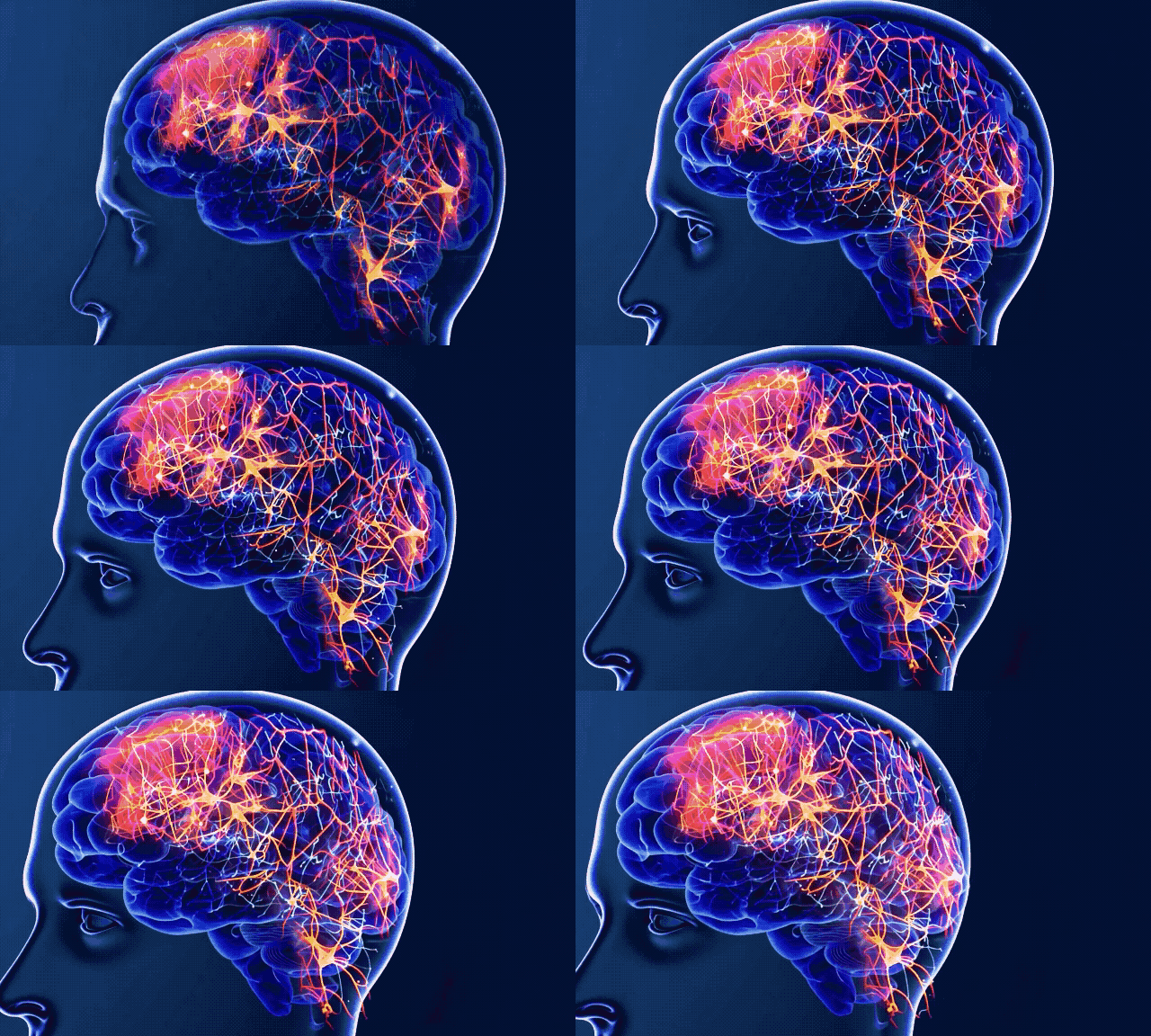
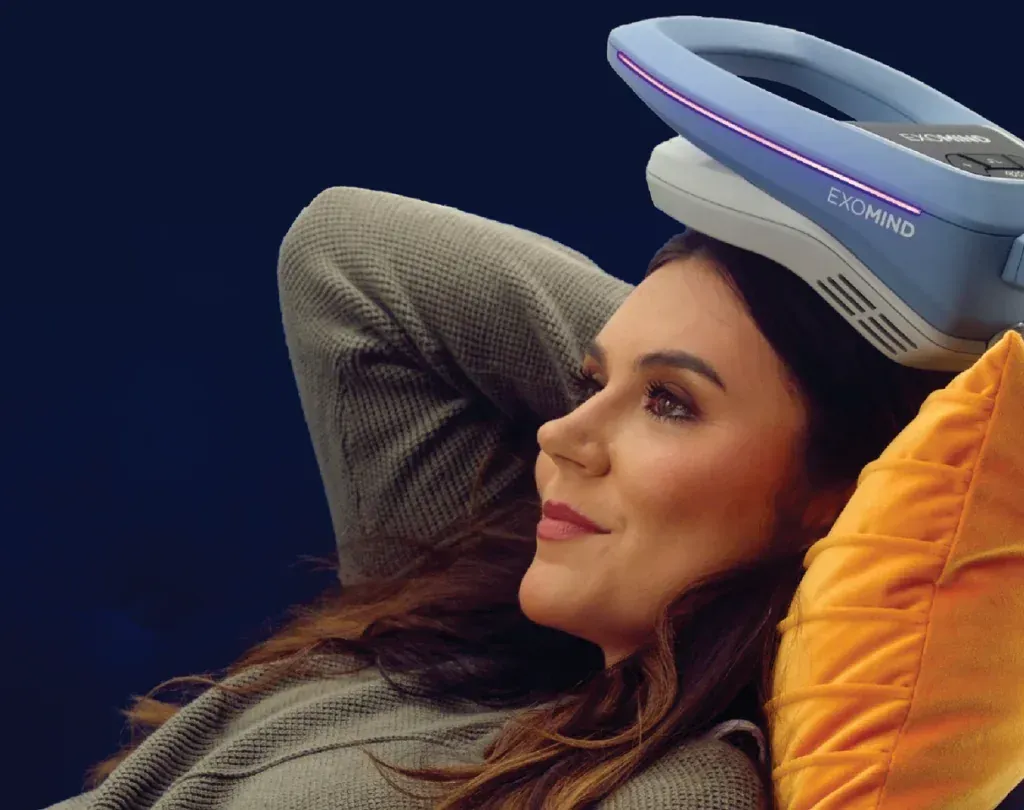
TMS works by delivering targeted magnetic pulses through a coil placed against the scalp. These pulses—similar in strength to those used in an MRI machine—penetrate the skull and induce small electrical currents in specific brain regions, stimulating neural activity.
The primary target for depression treatment is the left dorsolateral prefrontal cortex (DLPFC), a region involved in mood regulation, executive function, and emotional processing. In people with depression, this area is often underactive. TMS stimulates these dormant neural pathways, promoting increased activity and, over time, encouraging the growth of new synaptic connections through a process called neuroplasticity.
Think of it like physical therapy for the brain. Each TMS session is essentially a workout for the neurons in mood-regulating regions. With repeated stimulation, these neural networks grow stronger and more resilient, restoring normal communication patterns that were impaired by depression or anxiety.
For anxiety and OCD, TMS may target different brain regions. Anxiety often involves an overactive right prefrontal cortex and amygdala—the brain's threat-detection system stuck in "on" mode. TMS can help recalibrate these circuits, reducing the constant state of hypervigilance that characterizes anxiety disorders.
What Conditions Does TMS Treat?
FDA-Cleared Conditions
- Major Depressive Disorder (MDD): The primary FDA-cleared indication. TMS is particularly effective for treatment-resistant depression—patients who haven't responded adequately to antidepressant medications.
- Obsessive-Compulsive Disorder (OCD): Cleared by the FDA in 2018. TMS targets the anterior cingulate cortex, helping to reduce the brain's overactive "error detection" system that drives compulsive behaviors.
- Anxious Depression: FDA-cleared for major depression with comorbid anxiety symptoms.
- Smoking Cessation: Cleared for reducing cravings by targeting prefrontal circuits involved in addiction.
Off-Label Applications (Supported by Research)
- Generalized Anxiety Disorder: Multiple studies show significant reductions in anxiety symptoms, particularly when combined with cognitive behavioral therapy.
- PTSD: Research demonstrates TMS can help calm hyperactive threat-response systems in trauma survivors.
- ADHD: A 2023 meta-analysis showed meaningful improvements in sustained attention with prefrontal cortex stimulation.
- Chronic Pain and Fibromyalgia: TMS can modulate the brain's pain-processing networks, reducing symptom severity.
- Cognitive Enhancement: Some patients without psychiatric diagnoses use TMS to optimize focus, mental clarity, and cognitive performance.
Is TMS FDA Approved?
Yes. TMS is not experimental, alternative, or unproven.
The FDA first cleared TMS for treatment-resistant major depressive disorder in October 2008. Since then, the FDA has expanded clearance to include:
- 2008: Major Depressive Disorder (treatment-resistant)
- 2018: Obsessive-Compulsive Disorder
- 2020: Anxious Depression (MDD with anxiety features)
- 2020: Smoking Cessation
These approvals are based on decades of peer-reviewed research, randomized controlled trials, and extensive real-world evidence. TMS has one of the strongest safety profiles of any neuropsychiatric intervention available today.
More than 65 randomized controlled trials have been conducted on TMS for depression alone. Meta-analyses consistently show TMS is approximately 2.4 times more effective than placebo in producing a clinical response.
What Does a TMS Session Feel Like?
During a TMS session, you sit in a comfortable chair while a technician or physician positions a magnetic coil against your scalp. When the device is activated, you'll hear a clicking sound and feel a tapping sensation on your head—often described as a woodpecker-like feeling.
Most patients find the sensation unusual but tolerable. Any discomfort typically decreases after the first few sessions as you become accustomed to the treatment.
During the session, you're fully awake and alert. Many patients read, watch videos, or simply relax. There's no sedation, no anesthesia, and no recovery time needed afterward. You can drive yourself to and from appointments and return to work or daily activities immediately.
A single session lasts anywhere from 3 minutes(with newer theta burst protocols) to 37 minutes(with traditional protocols), depending on the specific treatment approach used.
How Long Does TMS Treatment Take?
Treatment duration depends on the protocol used:
Traditional TMS Protocol
- Sessions: 36 sessions total
- Frequency: 5 sessions per week
- Duration: 6-8 weeks
- Session length: 19-37 minutes per session
This is the original FDA-cleared protocol and remains the most widely used approach, particularly at clinics that accept insurance.
Accelerated TMS Protocols
Newer research, including the Stanford Accelerated Intelligent Neuromodulation Therapy (SAINT) protocol, has demonstrated that TMS can be delivered in compressed timeframes without sacrificing effectiveness.
Accelerated protocols may include:
- Multiple sessions per day (up to 10 sessions)
- Treatment completed in 1-5 days instead of 6-8 weeks
- Same total pulse count as traditional protocols
At Kind Minds, the KIND One-Day TMS Protocol delivers a full therapeutic course in a single day—20 sessions of theta burst stimulation spaced throughout the day. This approach, developed and first implemented at Kind Minds under Dr. Georgine Nanos's leadership, represents the first time a full therapeutic course of TMS was safely condensed into a single day in real-world clinical practice.
What Are the Side Effects of TMS?
TMS has an excellent safety profile with minimal side effects compared to medications or other brain stimulation treatments.
Common Side Effects (Mild and Temporary)
- Headache: Occurs in approximately 50% of patients, typically mild and resolves with over-the-counter pain relievers
- Scalp discomfort: Tapping sensation at the treatment site, usually diminishes after the first week
- Facial twitching: Temporary muscle contractions during stimulation
These side effects typically decrease as treatment progresses and most patients tolerate TMS very well.
Rare but Serious Risks
- Seizure: Extremely rare, occurring in approximately 0.01% of treatments (1 in 10,000). This risk is lower than many common medications and comparable to the general population's baseline seizure risk.
What TMS Does NOT Cause
Unlike medications, TMS does not cause:
- Weight gain
- Sexual dysfunction
- Emotional blunting or feeling "numbed"
- Cognitive impairment or memory problems
- Drowsiness or fatigue
- Drug interactions
Unlike ECT (electroconvulsive therapy), TMS does not require anesthesia and does not cause memory loss.
How Effective Is TMS Therapy?
TMS effectiveness is measured using two key metrics: Response rate(percentage of patients experiencing at least 50% improvement in symptoms) and Remission rate(percentage of patients achieving a symptom-free or near-symptom-free state).
| Metric | Clinical Trials | Real-World |
|---|---|---|
| Response Rate | 50-70% | 65-75% |
| Remission Rate | 30-40% | 45-60% |
These numbers are particularly impressive given that most TMS studies focus on treatment-resistant patients—people who have already failed multiple antidepressant medications.
Kind Minds Outcomes
In a peer-reviewed, published study of the KIND One-Day TMS Protocol, Kind Minds reported:
These represent some of the strongest real-world outcomes ever reported for TMS therapy, measured using validated clinical scales (PHQ-9 for depression, GAD-7 for anxiety).
Durability of Results
Unlike ketamine infusions, which often require ongoing maintenance treatments every 2-4 weeks, TMS results tend to be durable. Many patients maintain improvement for 6-12 months or longer after completing treatment. Some patients benefit from occasional "booster" sessions, but many do not require additional treatment.
Who Is a Good Candidate for TMS?
Ideal Candidates
- Adults with major depressive disorder who haven't responded adequately to antidepressant medications
- Patients who experience intolerable side effects from antidepressants
- People seeking a non-medication treatment option
- Patients with OCD who haven't achieved adequate relief from therapy and/or medication
- Individuals with depression and comorbid anxiety
Who Should NOT Receive TMS
TMS is not appropriate for everyone. Contraindications include:
- Metal implants in or near the head: Including cochlear implants, deep brain stimulators, or aneurysm clips (dental fillings and braces are generally safe)
- History of seizures or epilepsy
- Certain medical conditions: Discuss your full medical history with your provider
Special Populations
TMS is often an excellent option for populations who cannot safely take antidepressants:
- Pregnant women: TMS is considered safe during pregnancy when medication is not an option
- Older adults: No cognitive side effects make TMS preferable to ECT for many elderly patients
- Teens: Emerging research supports TMS for adolescents with treatment-resistant depression
TMS vs. Other Treatments
TMS vs. Antidepressant Medication
| Factor | TMS | Antidepressants |
|---|---|---|
| Response rate (first-line) | 50-70% | 37% (STAR*D trial) |
| Systemic side effects | None | Common (weight gain, sexual dysfunction, GI issues) |
| Treatment duration | Weeks to complete | Ongoing indefinitely |
| Mechanism | Direct brain stimulation | Chemical neurotransmitter modulation |
TMS vs. ECT (Electroconvulsive Therapy)
| Factor | TMS | ECT |
|---|---|---|
| Anesthesia required | No | Yes |
| Memory side effects | None | Common |
| Seizure induced | No (avoided) | Yes (intentional) |
| Recovery time | None | Hours to days |
| Setting | Outpatient | Usually inpatient |
TMS vs. Ketamine
| Factor | TMS | Ketamine |
|---|---|---|
| FDA status | Cleared for depression, OCD | Off-label (except Spravato) |
| Durability | Months to years | Days to weeks |
| Maintenance required | Occasional boosters for some | Regular infusions (every 2-4 weeks) |
| Side effects during treatment | Mild tapping sensation | Dissociation, nausea |
| Can drive after | Yes | No |
What to Expect at Your First TMS Appointment
Initial Consultation
Your first appointment is typically a clinical evaluation—not a treatment session. A physician will:
- Review your medical and psychiatric history
- Assess previous treatments and their outcomes
- Determine if you're a good candidate for TMS
- Discuss treatment options and protocols
- Answer your questions
Motor Threshold Mapping
Before your first treatment, the provider will determine your "motor threshold"—the minimum amount of magnetic energy needed to stimulate your brain. This is done by delivering pulses to the motor cortex and observing small movements in your hand or fingers. This measurement ensures your treatment is calibrated specifically to your brain.
Treatment Sessions
Once treatment begins, sessions follow a predictable routine:
- You're seated comfortably in the treatment chair
- The coil is positioned against your scalp
- Treatment is delivered (3-37 minutes depending on protocol)
- You leave and continue your day normally
Frequently Asked Questions
Does TMS hurt?
Most patients describe TMS as uncomfortable but tolerable, particularly during the first few sessions. The tapping sensation typically becomes less noticeable over time.
Can I continue my medications during TMS?
In most cases, yes. TMS does not interact with medications, and many patients continue their current prescriptions during treatment. Your physician will advise on your specific situation.
How soon will I feel results?
Some patients notice improvement within the first 1-2 weeks; others may not experience significant changes until after completing treatment. Many patients continue to improve in the weeks following their final session.
Is TMS covered by insurance?
Many insurance plans, including Medicare, cover TMS for treatment-resistant depression. Coverage typically requires documentation that you've tried and not responded to antidepressant medications. Accelerated protocols may not be covered.
Can TMS be repeated if symptoms return?
Yes. TMS can be safely repeated, and many patients benefit from "booster" sessions if symptoms begin to return months or years after initial treatment.
Is TMS Right for You?
TMS represents a fundamentally different approach to treating depression, anxiety, and OCD—one that works directly on the brain's neural circuits rather than flooding your system with chemicals that affect your entire body.
If you've tried medications without adequate relief, experienced intolerable side effects, or simply want a non-pharmaceutical option, TMS may be worth exploring.
The treatment has helped millions of people worldwide reclaim their lives from depression and anxiety. As one patient described it: "I didn't even realize how much I'd lost until it came back."
Ready to learn more?
At Kind Minds, we offer a complimentary consultation to help you determine if TMS is right for your situation. Our physician-led team will review your history, answer your questions, and help you understand your options—with no pressure and no obligation.
Schedule Your Consultation