Cannabis use among teens and young adults has become increasingly common. With legalization, commercialization, and cultural normalization, many families now assume marijuana is relatively harmless—especially when compared to alcohol. But neuroscience and clinical medicine tell a more complicated story.
@drgeorginenanos has seen firsthand how cannabis can affect young people’s mental health, emotional regulation, and long-term brain function. The concern is not occasional adult use—it’s THC exposure during brain development, when the brain is still actively wiring itself. Thank you FOX 5 San Diego for sharing this topic!
See the full clip linked in bio or on youtube channel.
Dr. Nanos also wrote an entire article on this topic, to learn more head over to kindminds.com
Your brain is changing right now. The question is: who's directing it?
Every habit. Every thought. Every emotion. Every reaction.
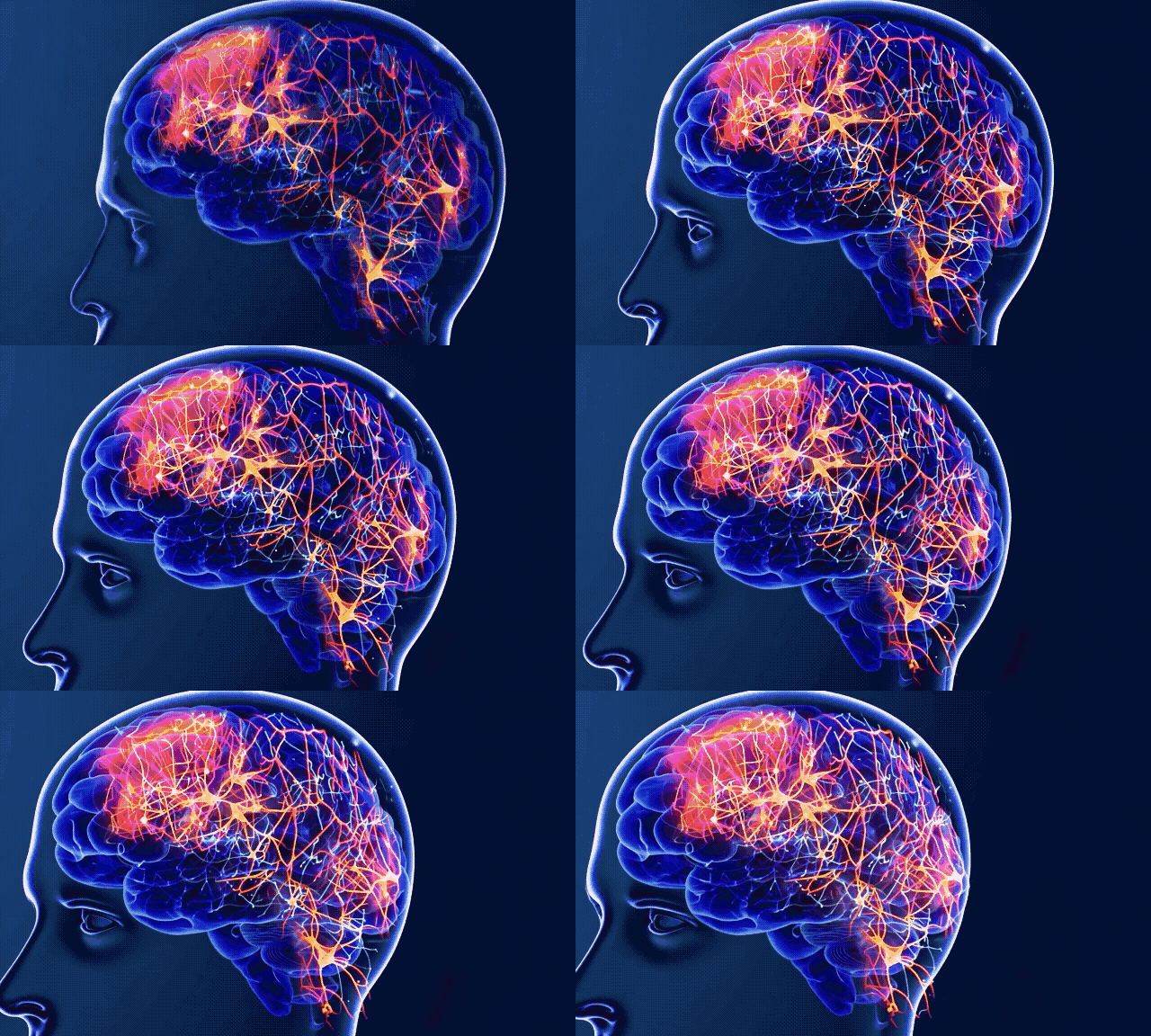
Neuroplasticity is happening whether you want it to or not.
Your brain is constantly rewiring itself based on what you feed it—and most of us are reinforcing stress without realizing it. The same loops of worry. The same patterns of overwhelm. The same survival-mode reactions.
That's not a flaw. That's just how brains work. 🧠
But here's where it gets exciting:
If your brain can wire itself toward exhaustion and anxiety, it can also wire itself toward clarity and resilience.
#TMS is simply a tool that helps steer the rewiring in the direction YOU want your brain to go. Not masking symptoms. Not numbing the noise. Actually changing the neural pathways that got stuck in the wrong pattern.
You're not at the mercy of your brain. You can direct the change.
If you want to learn how, check out our link in bio or DM us "mind" for more!
People always ask what can go wrong with TMS. Honestly? Very little.
No sedation. No anesthesia. No memory loss. No weight gain. No sexual dysfunction. No withdrawal if you stop.
The most common side effect is a mild headache that goes away. Maybe some scalp discomfort during the session. That's it.
You walk in, get treatment, walk out, drive yourself home, go back to your day. After 15+ years of FDA approval and millions of sessions worldwide, serious adverse events are incredibly rare. Compare that to the side effect list on any antidepressant and it's not even close. The safety profile is one of the most remarkable things about TMS. And honestly one of the reasons it should be a first-line treatment, not a last resort.
DM "mind" for a special message from Dr. Nanos
You're not fragile. You're just full.
Read that again.
When everything feels like too much—too many messages, too many decisions, too many responsibilities—that's not a character flaw.
That's your brain at maximum capacity.
Your nervous system wasn't designed to handle the constant comparison, constant alerts, and constant uncertainty that modern life throws at you. Especially if you're a young adult questioning where you're headed and why you're not further along.
So when small things trigger big reactions? When you snap at someone over nothing? When you feel exhausted by tasks that used to be easy?
That's not dramatic. That's overload.
Your brain is trying to survive—not thrive.
But here's the truth: We can help you calm that down. Restore your ability to regulate. Build resilience that actually lasts.
You don't have to stay at maximum capacity forever.
Reach out. We're here. 💙
If your brain can create a bad habit, it can create a good one. Overthinking. Shutting down. Snapping. Spiraling. These aren't personal failures. They're well-practiced neural pathways. And the same brain that built those patterns can build new ones. That's neuroplasticity. Your brain is always under renovation. It can be changed. It can be improved. You're not stuck with the version of yourself that learned to cope in survival mode.