You Didn't Fail the Medications—The Medications Failed You
If antidepressants haven't worked after years of trying, you're not broken
I'm going to be direct with you because I think you've had enough of the runaround.
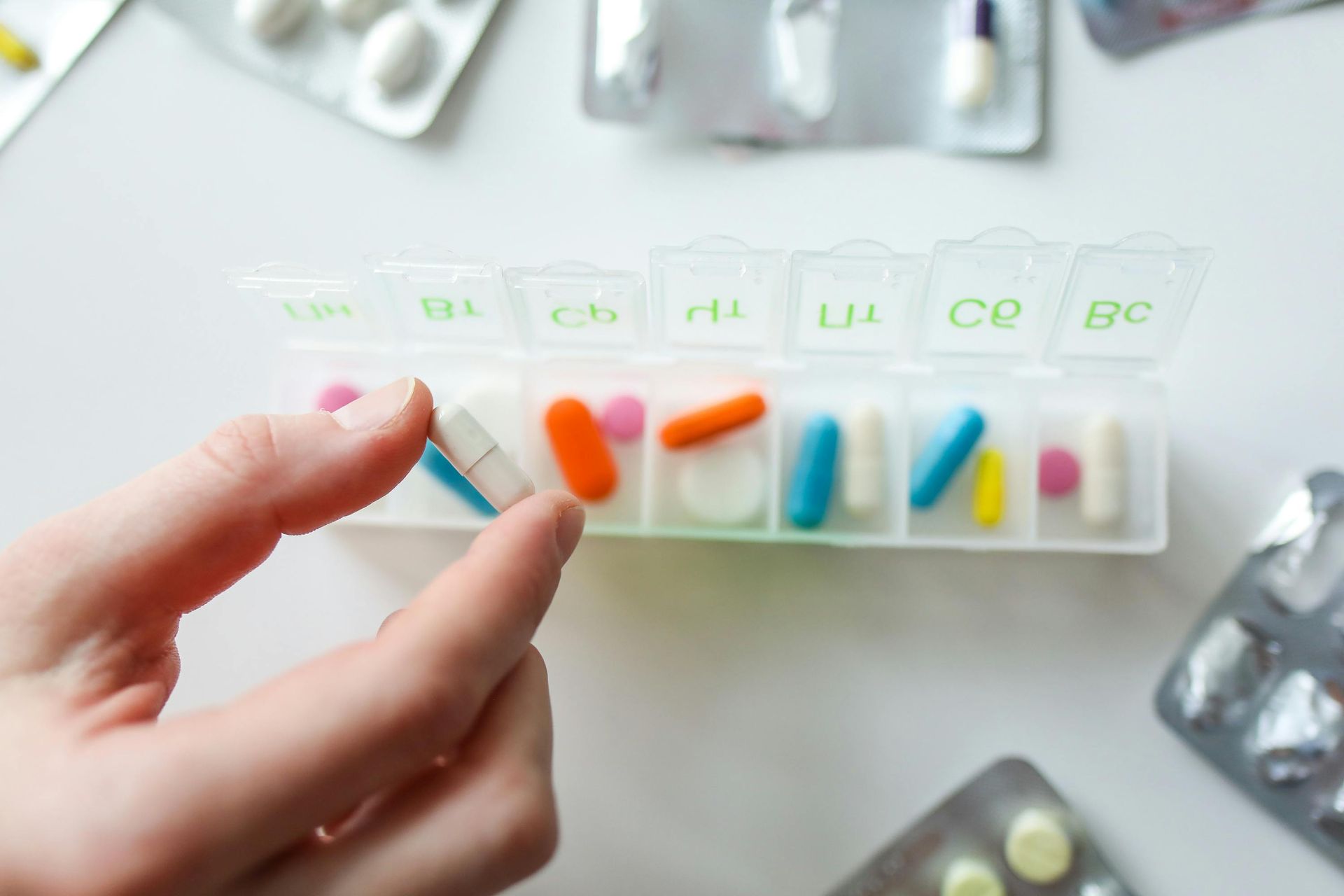
If you're reading this, you've probably tried two, three, maybe five or more antidepressants. You've waited the six weeks. Increased the dose. Added an augmenting agent. Switched classes. Started over.
And somewhere along the way, you started to believe that the problem was you.
That you're "treatment-resistant." That your depression is somehow special, somehow worse, somehow unfixable. That you didn't try hard enough, believe hard enough, give the medication enough time.
I'm here to tell you something that nobody else in healthcare seems willing to say:
You didn't fail the medications. The medications failed you.
And that's not a flaw in your character or your brain chemistry. That's a flaw in a system that has exactly one hammer and treats every problem like a nail.
Let me paint a picture I see in my office every single week.
A woman in her forties sits across from me. She's been on antidepressants for fifteen years. Started on Lexapro after her second child. It worked okay for a while, then stopped. Her doctor switched her to Zoloft. More side effects, same depression. Then Effexor. Then Wellbutrin added on. Then Cymbalta when the Effexor gave her terrible withdrawal.
She's gained forty pounds. Her libido disappeared somewhere around medication number three. She describes feeling "flatlined"—not suicidal anymore, but not alive either. Just existing.
And here's the part that breaks my heart: she blames herself.
"Maybe I'm just not trying hard enough," she tells me.
No. Just... no.
What the Research Actually Shows
Let's talk numbers for a second, because this isn't me complaining—this is what the science tells us.
The STAR*D trial was the largest study ever conducted on antidepressant effectiveness. Funded by the National Institutes of Health. Over 4,000 real patients in real clinics. Not handpicked research subjects—actual people struggling with depression.
Here's what they found:
Only 37% of patients achieved remission with the first antidepressant.
That means nearly two-thirds of people walked away still depressed after that first medication. And it gets worse.
With the second medication: remission dropped further.
With the third: even lower.
By the fourth attempt: less than 7% achieved remission.
7% percent.
So when you've tried multiple medications without success, you're not some rare exception. You're actually in the majority. The system is failing most of the people it's supposed to help.
Here's what makes the medication carousel especially cruel: while you're waiting to see if each new pill works, you're also dealing with a growing list of side effects that can be worse than the depression itself.
Weight gain.
Not a few pounds—sometimes 20, 30, 50 pounds. Your metabolism changes. Your relationship with food changes. Your body becomes unrecognizable.
Sexual dysfunction.
Up to 70% of patients on SSRIs experience this. Decreased desire. Difficulty with arousal. Inability to reach orgasm. And then the cruel irony: depression itself affects intimacy, so now you have that problem plus medication-induced dysfunction.
Emotional blunting.
This one might be the worst because it's so insidious. You're not crying as much, so technically you're "better." But you're also not laughing. Not feeling joy. Not connecting. Patients describe it as living life behind glass—watching everything happen without fully participating.
Cognitive fog.
Trouble concentrating. Memory problems. Feeling mentally slower. You went on medication to function better, and now you're struggling to remember what you walked into a room for.
Withdrawal.
And when you try to stop—whether because the medication isn't working or because the side effects are unbearable—you discover discontinuation syndrome. Brain zaps. Flu-like symptoms. Anxiety worse than before you started. Some people are trapped on medications not because they help, but because getting off them is unbearable.
This is what we call "treatment." This is what we accept as standard care.
I need to talk about this term because it makes me genuinely angry.
"Treatment-resistant depression."
Read those words carefully. The label puts the resistance on the patient. On you. As if your brain is stubbornly refusing to cooperate. As if you're somehow broken in a way that defies treatment.
But here's what that label actually means: the treatments we tried didn't work.
That's not the same thing.
A more honest term would be "medication-inadequate depression" or "undertreated depression" or "needs-a-different-approach depression."
Because here's the truth: if you've failed multiple medications, you haven't failed treatment. You've failed ONE type of treatment. There are others. TMS is one of them. And the outcomes for people who "failed" medications are often excellent when we actually try something different.
Let me explain something that most doctors don't take time to explain.
The serotonin theory of depression—the idea that depression is caused by a "chemical imbalance" that medications correct—is vastly oversimplified. We know this now. It was a useful marketing framework, but it doesn't capture what's actually happening in the brains of people with depression.
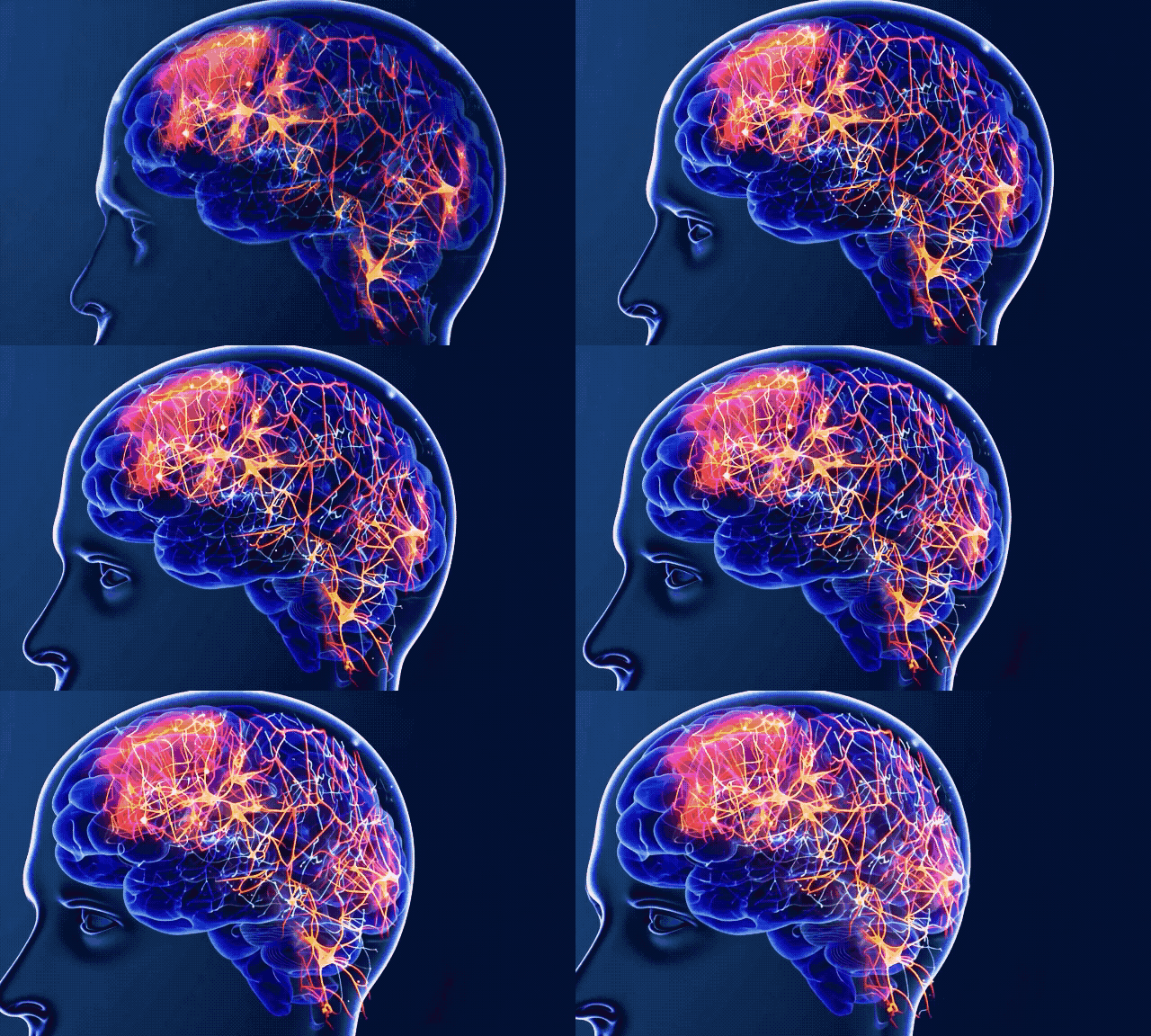
Depression is a circuit problem, not just a chemistry problem.
Specific networks in your brain—particularly areas involved in mood regulation, motivation, and emotional processing—are underactive or dysregulated. Just flooding your system with more serotonin doesn't always fix circuit-level dysfunction. It's like turning up the volume when the speakers are broken.
TMS works differently. It directly stimulates the brain circuits that are stuck. It's not adding a chemical to your bloodstream and hoping it reaches the right place. It's targeting the problem at its source.
This is why so many patients who "failed" medications respond beautifully to TMS. They weren't treatment-resistant. They just needed a treatment that actually addressed their specific problem.
What I Want You to Know
If you're reading this while sitting on your bed, staring at a bottle of pills that you don't even know if you should bother taking because nothing has helped—I want you to hear this:
You're not broken.
The fact that medications didn't work doesn't mean you're unfixable. It means the tool wasn't right for the job. That's it.
I've watched hundreds of patients who had completely given up find their way back to themselves. People who hadn't felt genuine joy in years suddenly laughing at their kid's jokes. People who thought they'd be depressed forever waking up one morning and realizing the weight was gone.
This happens. It happens more often than you'd believe possible if you've been stuck in the medication carousel for years.
The Questions to Ask Yourself
If you've been cycling through medications without relief, consider:
- Have you been on three or more antidepressants without achieving remission?
- Are you dealing with side effects that feel almost as bad as the depression itself?
- Do you feel "flatlined," "numb," or like a muted version of yourself?
- Have you been told you're "treatment-resistant" and left feeling hopeless?
- Are you still taking medication not because it helps, but because stopping seems impossible?
If any of these resonate, you're not alone. And you're not out of options.
Traditional TMS therapy has response rates of 50-70% in patients who have failed multiple medications. That's not a typo. The very patients the medication carousel failed are responding to a treatment that works through a completely different mechanism.
At Kind Minds, our KIND One-Day TMS Protocol has shown even stronger outcomes—88% response rates and 72% remission rates in our published research.
These are patients just like you. People who had been told—directly or indirectly—that they were the problem. People who had internalized the message that if only they'd tried harder, stuck with it longer, believed more deeply, the pills would have worked.
The pills don't work for everyone. That's not a moral failing. That's biology.
But there are other options. You deserve to know about them.
I'm not here to tell you to stop your medications. That decision should be made carefully, with your doctor, based on your specific situation.
What I am here to tell you is this: if you've lost hope because nothing has worked, it might be time to try a different approach entirely.
TMS isn't a pill that might work in six weeks if you can tolerate the side effects. It's a treatment that targets the actual problem—the brain circuits that are stuck—without adding another chemical to your already-overwhelmed system.
You've waited long enough. You've tried hard enough. You've blamed yourself enough.
Maybe it's time to try something that might actually work.
At Kind Minds, we specialize in helping patients who have been told they're "treatment-resistant." Our complimentary consultation will help you understand whether TMS might be right for your situation—no pressure, no judgment, just honest information.
*Medical Disclaimer: This content is for informational purposes only and does not constitute medical advice. Never stop or change medications without consulting your healthcare provider. Individual results vary.*
Dr. Georgine Nanos, MD, MPH, is a board-certified physician and founder of Kind Minds in Encinitas, California. She has helped hundreds of patients find relief after years of medication failure. Dr. Nanos is a senior contributing author on peer-reviewed TMS research and a passionate advocate for expanding treatment options in mental healthcare.

Meet the Author
Dr. Georgine Nanos, MD, MPH
Founder of Kind Health Group