
Why Family Gatherings Seem Hard
This is not a personality flaw

You know that moment when your uncle says something inflammatory at dinner and instead of responding calmly—like the competent, articulate person you are every other day of the year—you either shut down completely or say something you immediately regret?
That's not a personality flaw. That's your prefrontal cortex going offline.
Let me explain what's actually happening in your brain during stressful family gatherings—and more importantly, what you can do about it.
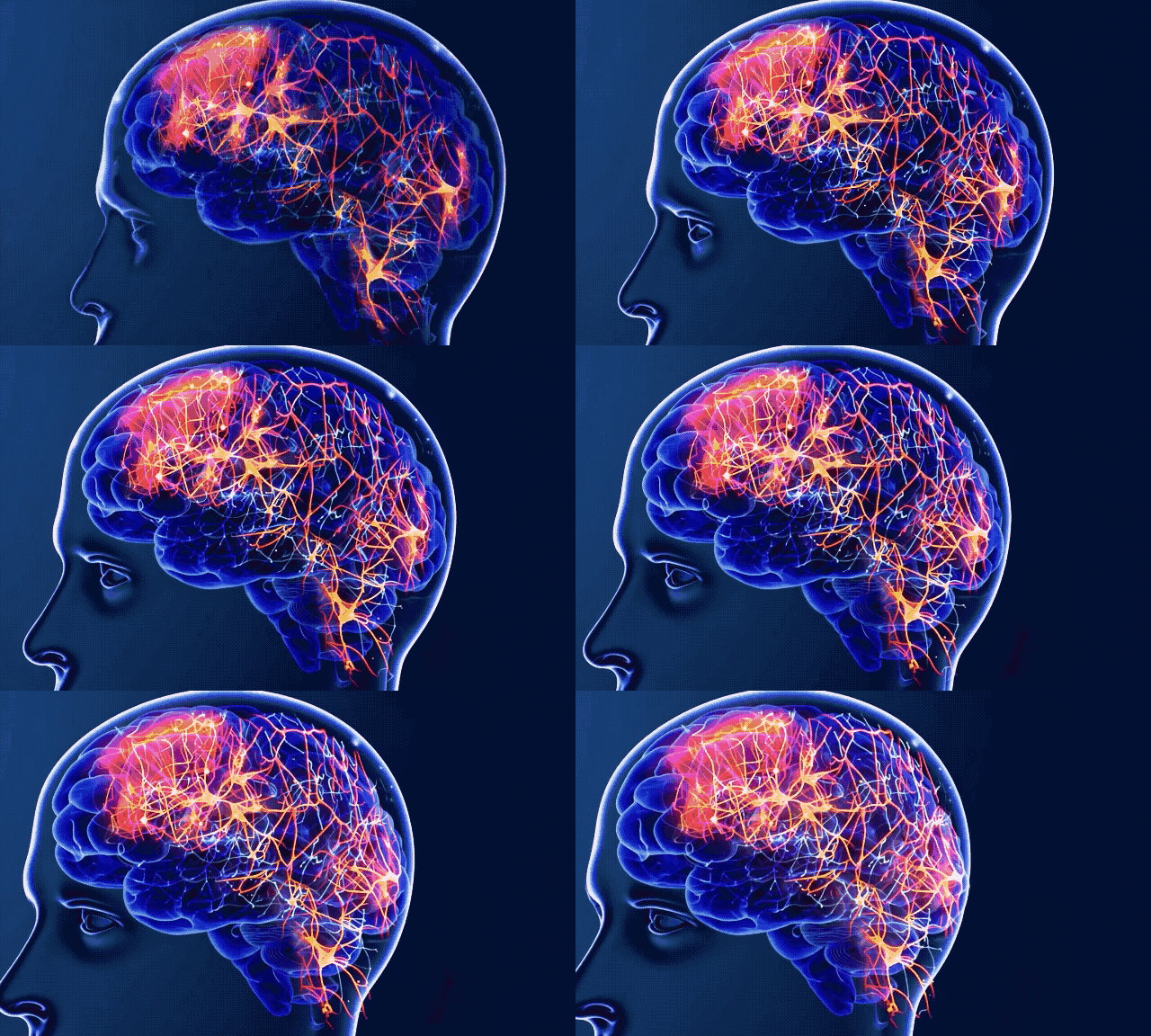
Your Prefrontal Cortex: The Brain's Executive Command Center
The prefrontal cortex (PFC), particularly the dorsolateral prefrontal cortex (DLPFC), is your brain's CEO. This region is responsible for
- Executive function (planning, organizing, prioritizing)
- Emotional regulation (staying calm under pressure)
- Impulse control (thinking before you speak)
- Working memory (holding multiple thoughts simultaneously)
- Strategic decision-making (navigating complex social dynamics)
In other words, it's the exact suite of skills you need to survive a family gathering without losing your mind.
But here's the problem: Your prefrontal cortex is exquisitely sensitive to stress. And family gatherings with their layered histories, unspoken expectations, and emotional landmines, create the perfect storm for shutting it down.
What Happens When Your PFC Goes Offline
Research from neuroscience labs at Stanford and Harvard reveals what happens when stress hijacks your brain:
1. Blood Flow Redirects to Survival Centers
Under stress, your brain prioritizes immediate survival over complex thinking. Blood flow shifts away from your prefrontal cortex and toward your amygdala (fear processing) and brainstem (fight-or-flight responses). This is why you can't access your usual clarity and composure when your mother-in-law makes a passive-aggressive comment about your parenting.
2. Cortisol Suppresses PFC Activity
Elevated cortisol—your primary stress hormone—actively inhibits prefrontal cortex function. Studies show that even moderate stress can impair working memory, reduce cognitive flexibility, and weaken impulse control. Your brain literally becomes less capable of the thoughtful, measured responses you'd normally have.
3. Your Amygdala Takes Over
When your PFC is suppressed, your amygdala—the brain's alarm system—runs the show. Everything feels like a threat. Minor disagreements trigger major emotional reactions. You become hypervigilant, defensive, or shut down entirely.
This isn't emotional immaturity. This is neurobiology.
Why Some Family Gatherings Are Neurologically Harder Than Others
Not all stress is created equal. The specific type of stress family gatherings create—complex social dynamics with high emotional stakes and limited control—is particularly challenging for your brain.
Chronic vs. Acute Stress
Your brain can handle acute stress relatively well. A sudden deadline, a near-miss in traffic—your prefrontal cortex can usually recover quickly. But family gatherings often involve chronic, unresolved stress patterns that have been building for years. Your brain recognizes these patterns and preemptively downregulates your PFC before you even arrive.
Emotional Memory Triggers
Your hippocampus—the brain's memory center—stores emotional memories with remarkable clarity. That childhood feeling of not being heard? The recurring argument about politics? These aren't just memories; they're neural pathways that activate automatically when triggered. And when they activate, they bypass your prefrontal cortex entirely, defaulting to old reactive patterns.
Social Threat Detection
Research in social neuroscience shows that social rejection, criticism, or exclusion activate the same brain regions as physical pain. When you're in an environment where you feel judged, dismissed, or misunderstood, your brain processes this as a legitimate threat—and shuts down higher-order thinking in favor of protection.
Brain Optimization Strategies: Keeping Your PFC Online
The good news: You can actively support your prefrontal cortex function before, during, and after stressful family gatherings. These aren't "tips to relax"—they're evidence-based strategies for maintaining neural function under stress.
Before the Gathering: Prime Your Brain
1. Get Adequate Sleep
Sleep deprivation reduces prefrontal cortex activity by up to 40%. If you're going into a stressful event already cognitively depleted, your brain has no reserve capacity. Prioritize 7-8 hours the night before—this is not optional.
2. Move Your Body
Exercise increases brain-derived neurotrophic factor (BDNF), which supports neural resilience and cognitive flexibility. Even 20 minutes of movement before a gathering primes your prefrontal cortex for better stress regulation.
3. Eat for Brain Function
Your prefrontal cortex runs on glucose, but it also depends on stable blood sugar. Protein, healthy fats, and complex carbohydrates support sustained cognitive function. Skip the sugar crash that comes from eating only cookies and pie.
During the Gathering: Protect Your Neural Resources
1. Implement Strategic Breaks
Your PFC has limited energy. Every social interaction, decision, and emotional regulation depletes this reserve. Step outside for five minutes. Go to the bathroom. Take a walk. These aren't antisocial—they're neural resets that allow your prefrontal cortex to recover.
2. Practice Box Breathing
Four counts in, hold for four, four counts out, hold for four. This activates your parasympathetic nervous system and increases oxygen flow to your prefrontal cortex. It's a fast, effective way to bring your PFC back online when you feel reactivity building.
3. Label Your Emotions
Neuroscience research shows that simply naming what you're feeling ("I'm feeling defensive right now") activates your prefrontal cortex and reduces amygdala reactivity. This technique—called affect labeling—literally shifts your brain from reactive to responsive mode.
4. Choose Your Cognitive Battles
Not every comment deserves a response. Not every debate is worth having. Your prefrontal cortex can't function optimally when it's managing constant conflict. Protect your cognitive bandwidth by disengaging from conversations that drain you.
After the Gathering: Support Neural Recovery
1. Process, Don't Ruminate
There's a difference between reflecting on what happened (PFC activity) and obsessively replaying it (amygdala activation). Journaling, talking with a trusted friend, or working with a therapist helps process the experience without getting stuck in it.
2. Move Stress Out of Your Body
Cortisol doesn't just disappear after a stressful event. Physical movement—a walk, yoga, even aggressive house cleaning—helps metabolize stress hormones and restore prefrontal cortex function.
3. Prioritize Sleep Again
Your brain needs time to consolidate emotional experiences and restore cognitive resources. Quality sleep after stressful events is essential for neural recovery.
When Lifestyle Strategies Aren't Enough: Brain-Based Interventions
For some people, these strategies provide adequate support. But for others—particularly those with chronic stress, anxiety, or depression—the prefrontal cortex remains chronically underactive no matter how many breathing exercises they do.
This is where understanding neuroplasticity and brain health optimization becomes critical.
Transcranial Magnetic Stimulation (TMS) is one example of a neurological intervention that directly targets prefrontal cortex function. Using targeted magnetic pulses, TMS stimulates the DLPFC, increasing neural activity in the exact region responsible for emotional regulation, executive function, and stress resilience.
Research shows that TMS not only increases prefrontal cortex activation but also promotes neuroplasticity—the brain's ability to form new, healthier neural pathways. For people whose stress response systems are chronically dysregulated, TMS offers a way to address the problem at its neurological source.
I'm not suggesting everyone needs TMS to survive family gatherings. But understanding that your stress response is neurological—not psychological—opens the door to treating it as such. Whether through therapy, medication, lifestyle modifications, or interventions like TMS, the key is recognizing that keeping your prefrontal cortex online isn't about willpower. It's about giving your brain the support it needs to function optimally under stress.
The Real Goal: Neural Resilience
The goal isn't to eliminate all stress or avoid difficult family dynamics entirely. The goal is to build neural resilience—the capacity of your brain to maintain prefrontal cortex function even under challenging conditions.
Neural resilience comes from:
Consistent sleep and movement patterns
Effective stress-regulation techniques
Addressing underlying neurological dysregulation when present
Recognizing when you need professional support
You don't need to be superhuman to handle family gatherings. You just need a brain that has the resources to do what it's designed to do: think clearly, regulate emotions, and respond thoughtfully instead of reactively.
Because the truth is: You're not too sensitive. You're not overreacting. Your brain is doing exactly what brains do under stress—and with the right support, it's capable of so much more.

Meet the Author
Dr. Georgine Nanos, MD, MPH
Founder of Kind Health Group