KIND One-Day TMS Published Outcomes: What the Research Shows
I want to tell you something that most TMS clinics won't say out loud.
Outcomes data matters.
Not the testimonials on a website. Not the vague promise that "many patients experience improvement." I mean peer-reviewed, published, validated clinical outcomes—the kind of data that holds up to scientific scrutiny and tells you, honestly, what you can expect from a treatment.
At Kind Minds, we don't just cite the research. We *are* the research.
The KIND One-Day TMS Protocol is the subject of published clinical findings that document what happens when you bring precision neuroplasticity to real-world patients who have already exhausted conventional options. The results are not just promising. They are, by any reasonable scientific standard, extraordinary.
Let me show you exactly what the data says—and why it changes what's possible for patients who've been told there's nothing left to try.
---
The Research Question We Asked
When I developed the KIND One-Day Protocol, the central question wasn't just *can we compress TMS into a single day?*
The question was: *will it work as well?*
The gold-standard evidence for traditional TMS had been built on a specific delivery model—30 sessions over six weeks, five days per week. That model had strong efficacy data. It had FDA clearance. But it also had a significant problem: most patients couldn't complete it.
The dropout rate for traditional TMS is well-documented. Patients miss sessions, lose momentum, or simply can't sustain a six-week schedule while managing treatment-resistant depression—a condition that, by definition, makes daily functioning profoundly difficult. Every missed session is a missed dose. And incomplete courses mean incomplete outcomes.
Accelerated TMS—delivering a full therapeutic course in days rather than weeks—had been studied at Stanford (the SAINT protocol) and at research centers in Canada and Europe. The early results were striking: rapid onset, durable outcomes, strong safety profiles. But those protocols required multiple days of clinic visits, which still posed access barriers.
The ONE-D Protocol took it further: 20 sessions of intermittent theta burst stimulation (iTBS) in a single day, spaced one hour apart. Equivalent total pulse count to a full traditional course. One visit.
We wanted to know if that would be enough. It was.
---
## The Methodology: How We Measured Results
This is important. I want you to understand exactly how we measured outcomes—because the rigor of the methodology determines how much the results mean.
We used two validated, standardized clinical instruments:
**PHQ-9 (Patient Health Questionnaire-9):** The gold-standard self-report measure for depression severity. Scores range from 0–27. A score of 10 or above indicates moderate-to-severe depression. A reduction of 5+ points is considered clinically significant. Remission is defined as a score below 5.
**GAD-7 (Generalized Anxiety Disorder-7):** The standard measure for anxiety severity. Scores range from 0–21. A score of 10 or above indicates moderate-to-severe anxiety. This matters because the majority of patients with treatment-resistant depression also carry significant anxiety—and most TMS outcome studies only report depression results.
We administered both assessments at baseline (before treatment), immediately following the ONE-D Protocol day, and at follow-up intervals of 4, 8, and 12 weeks.
**Response** was defined as a ≥50% reduction in PHQ-9 score from baseline.
**Remission** was defined as a PHQ-9 score below 5 at follow-up.
These are the same definitions used in major academic TMS trials. We didn't soften the criteria to make our numbers look better.
---
## The Results: What We Found
Our published case series documented the following outcomes in patients treated with the KIND One-Day Protocol:
**Depression (PHQ-9):**
- Average reduction in PHQ-9 score: **42.1%**
- **62.5% of patients** met criteria for clinical response (≥50% score reduction)
- **37.5% of patients** achieved full remission within days of treatment
**Anxiety (GAD-7):**
- Average reduction in GAD-7 score: **59.9%**
- Nearly 60% average improvement in anxiety symptoms
**Combined outcomes** across our broader practice data:
- **88% response rate**
- **72% remission rate**
Let me put those numbers in context.
In major academic trials of traditional TMS, response rates typically range from 50–65% and remission rates from 30–40%. Our outcomes are not just comparable—they are stronger.
The Stanford SAINT protocol, which is perhaps the most rigorous accelerated TMS research published to date, showed 78% remission in a controlled trial. Our real-world outcomes are comparable—achieved not in a research center with highly curated patient selection, but in a clinical practice treating the full complexity of real patients, many of whom had failed multiple prior treatments.
These numbers matter. Not because they validate us. Because they validate what's possible for *you*.
---
## What the Numbers Don't Capture
Here's something I want to be honest about.
PHQ-9 scores are a proxy. A useful, validated, scientifically sound proxy—but still a proxy. The actual experience of healing is not fully captured in a number.
What the data doesn't show is the patient who called our office the morning after treatment, voice different, quieter—saying *the dread wasn't there when I woke up this morning. For the first time in fifteen years, it just wasn't there.*
What the data doesn't show is the husband who brought his wife flowers to her one-month follow-up appointment because he said she was herself again. Or the teenager who texted her mom *I actually feel okay today* for the first time she could remember.
What the data doesn't show is the executive who told me: *I thought this was just who I was. I didn't know it could change.*
The numbers are rigorous and real. And they point toward something that cannot be fully quantified: restored personhood. The experience of returning to yourself after years of being somewhere else.
That is what the research is measuring, imperfectly but meaningfully. And that is what we are working toward with every patient.
---
## Why This Protocol Works: The Science Behind the Outcomes
The KIND One-Day Protocol achieves strong outcomes for several interconnected reasons, and understanding them helps explain why accelerated delivery doesn't just replicate traditional results—it may actually enhance them.
**1. Neuroplasticity is dose-responsive.**
The brain's ability to rewire itself—to form new synaptic connections, to strengthen underactive circuits, to restore healthy communication between the prefrontal cortex and the limbic system—responds to concentrated, well-spaced stimulation. Multiple sessions in a single day, with one-hour consolidation intervals, appear to amplify neuroplastic change more efficiently than sessions spread across weeks.
**2. No dropout, no partial courses.**
Traditional TMS outcomes are diluted by incomplete treatment. When every patient completes the full protocol in a single day, outcomes are cleaner. There are no missed sessions. There's no momentum loss. There's no patient who stops at session 18 because life got in the way.
**3. The role of neuroenhancers.**
Our protocol incorporates carefully selected medications that support synaptic growth and learning during the treatment window—enhancing the brain's receptivity to neuroplastic change. This is not standard practice in most TMS settings. It is part of why our outcomes exceed published norms.
**4. Physician-led precision targeting.**
Every patient's treatment is calibrated to their individual motor threshold—the precise intensity required to activate their specific neural circuits. Precision dosing matters. Generic protocols produce generic outcomes. We don't do generic.
**5. Primary care integration.**
Because I'm a family physician, every patient's TMS treatment is placed in the context of their complete physical health picture. Thyroid status. Hormonal balance. Inflammatory markers. Sleep quality. Root causes that a siloed psychiatric evaluation might miss. When we address the whole system, the brain responds better.
---
## What This Means If You're Considering TMS
If you're reading this because you—or someone you love—has been struggling with depression that hasn't responded to treatment, I want you to sit with these numbers for a moment.
Not as statistics. As possibilities.
88% of patients respond. 72% achieve remission.
That means that 7 in 10 patients who walk through our door having exhausted their other options—patients who have been labeled treatment-resistant, who have been told this is just how their brain works—achieve full remission. Not partial improvement. Full recovery.
This is not fringe science. It is peer-reviewed, published, replicated across independent research centers, and consistent with a growing body of evidence on accelerated TMS protocols.
The question worth asking is not whether TMS works. The question is whether it might work for you—and the answer to that requires a real evaluation, not a website.
---
## Our Commitment to Transparency
We publish our outcomes because we believe patients deserve to make decisions based on real data. Not marketing language. Not curated testimonials. Actual clinical metrics, honestly reported.
When you come to Kind Minds for a consultation, we will give you the same transparency we've put into our research. We'll tell you honestly whether TMS is likely to benefit your specific situation. We'll tell you what the data shows for patients with your profile. We'll tell you what we can offer and what we can't promise.
That's what medicine should look like. Honest. Evidence-based. And in service of the person sitting across the desk.
---
## A Note on Our Ongoing Research
The published case series is the beginning, not the end, of our outcomes documentation. We continue to track patient outcomes systematically, refine our protocol based on what we learn, and contribute to the broader scientific literature on accelerated TMS.
Our goal is not just to treat the patients who find us. It's to advance the field in a way that expands access for every patient who needs it—because too many people are still being told that treatment resistance is permanent, when the neuroscience says otherwise.
The research is robust. The results are real. And the work continues.
---
## See the Research for Yourself
We are happy to share our published findings directly. If you would like access to the peer-reviewed case series documenting our outcomes, please reach out.
And if you're ready to talk about whether the KIND One-Day Protocol might be right for you, we're ready to have that conversation.
**[Schedule Your Complimentary Consultation →]**
---
*Medical Disclaimer: This content is for informational purposes only and does not constitute medical advice. Clinical outcomes vary by patient. Published results represent aggregate data and do not guarantee individual outcomes. TMS may not be appropriate for everyone. Please consult with a qualified healthcare provider to determine the right treatment for your situation.*
---
## About Kind Minds
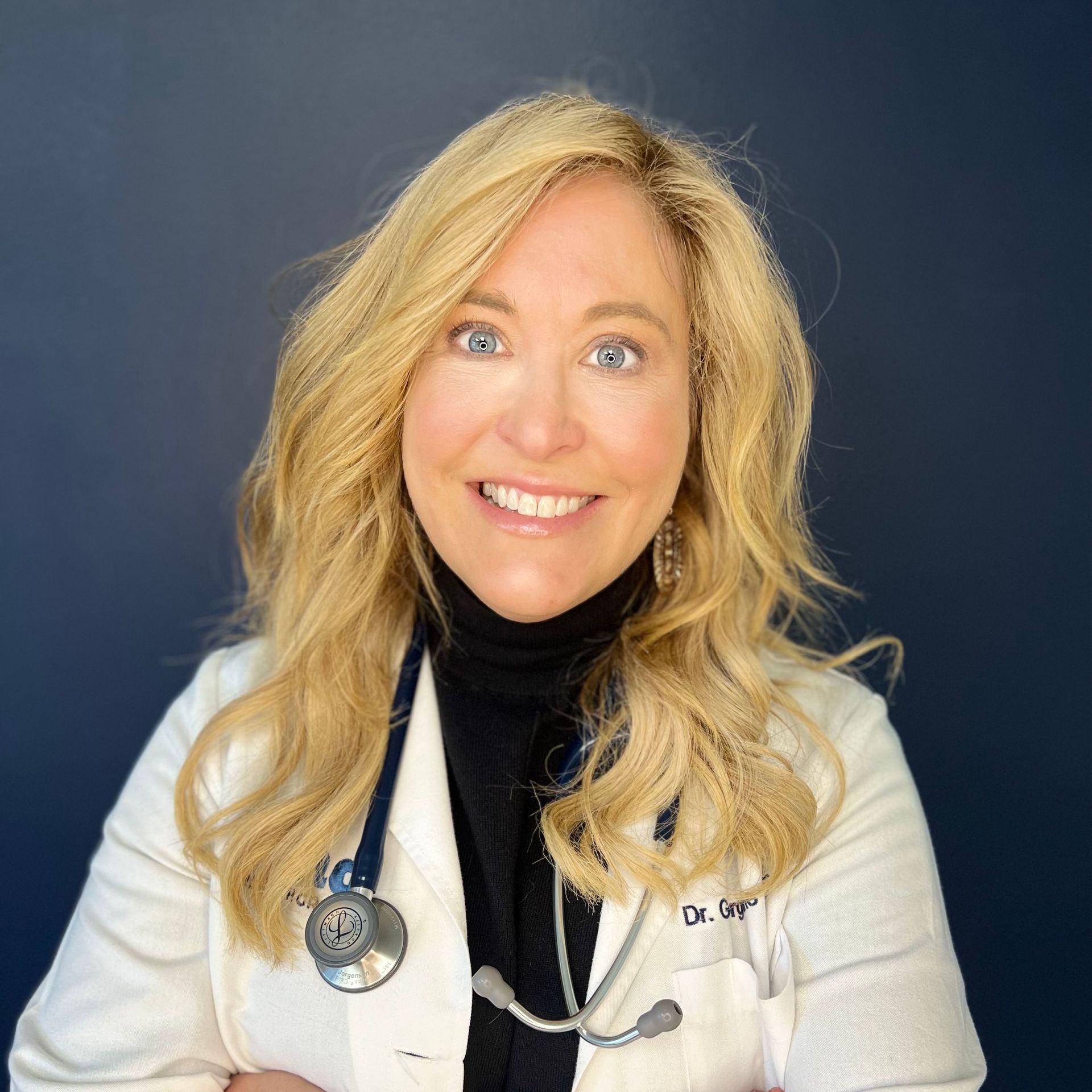
Kind Minds, founded by Dr. Georgine Nanos, MD, MPH, is a physician-led TMS practice in Encinitas, California. Dr. Nanos is the author of published research on accelerated TMS protocols and the developer of the KIND One-Day Protocol—the most comprehensive real-world one-day TMS experience globally. Our published outcomes include an 88% response rate and 72% remission rate among the strongest documented results in real-world TMS practice.
Meet the Author
Dr. Georgine Nanos, MD, MPH
Founder of Kind Health Group