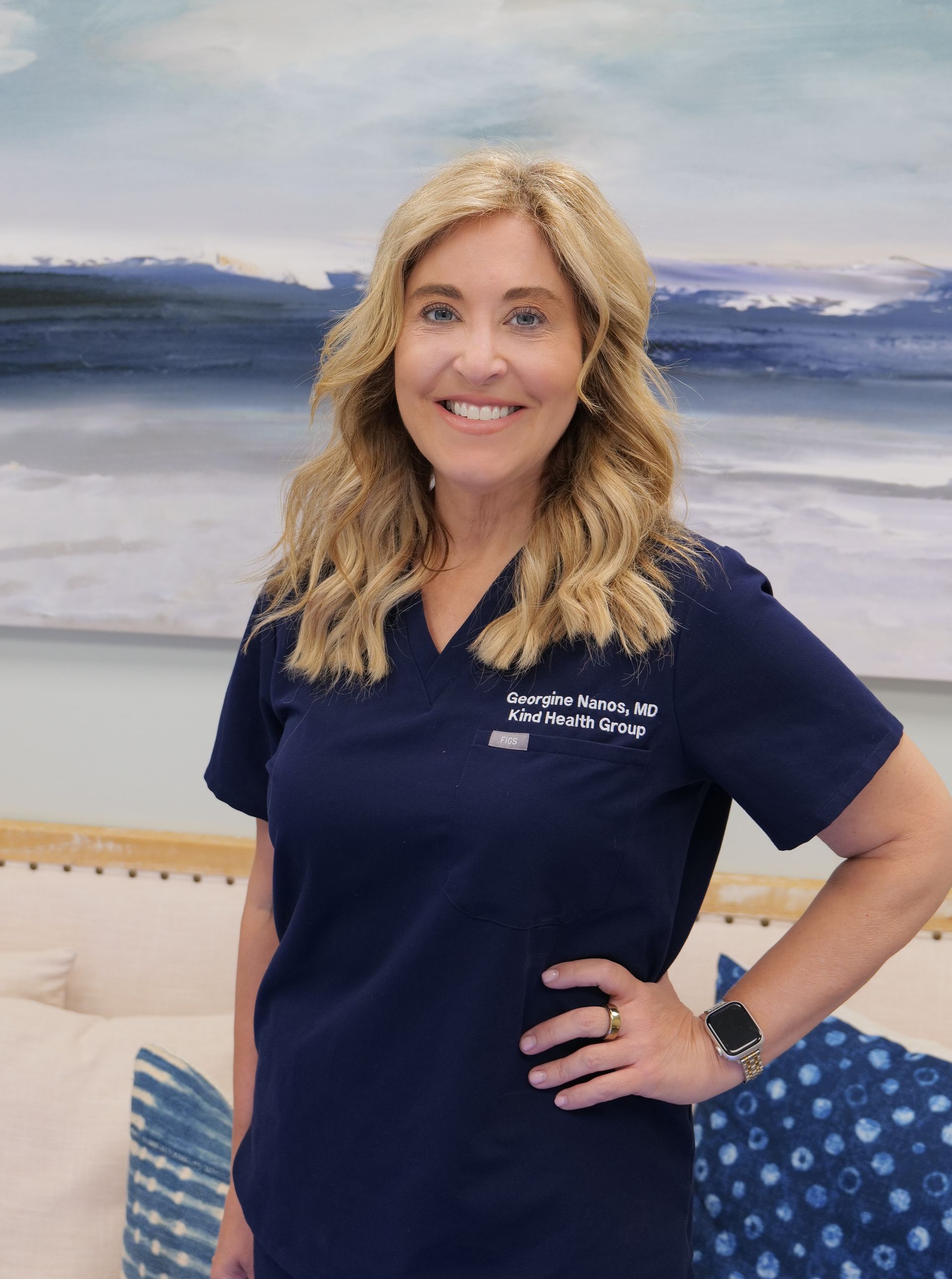
Meet Dr. Georgine Nanos: Why She Created One-Day TMS
The answer that changed everything
I have to be honest with you about something.
I didn't set out to become a TMS pioneer. I set out to be a family doctor who actually helped people—a physician who could look a patient in the eyes and say, we found the answer, not just, here's another prescription to try.
For twenty years, I did everything the traditional system taught me to do. I listened carefully. I followed the evidence. I prescribed the medications, referred to the specialists, sent patients through the standard pathways.
And for many patients, it wasn't enough.
The woman who'd tried six antidepressants and still couldn't get out of bed. The executive who'd been in therapy for a decade and still felt like he was watching his own life from behind glass. The mother who told me, quietly, that she couldn't remember what it felt like to be happy.
I kept asking myself: why are we accepting this?
Why does treatment-resistant depression stay resistant? Why does anxiety get managed but never actually healed? Why are we still offering the same tools that have been failing people for thirty years?
The answer I eventually found changed everything about how I practice medicine.
Background: A Physician Built for Integration
I'm Dr. Georgine Nanos. I'm a board-certified family physician and the founder of Kind Minds, a physician-led TMS practice in Encinitas, California.
My credentials: MD from a rigorous academic program, MPH (Master of Public Health) training that taught me to think about health at both the individual and systems level, and over two decades of hands-on clinical experience in primary care. I've treated thousands of patients across the full spectrum of human experience—births, deaths, chronic illness, mental health crises, the quiet suffering that never makes it into medical records.
Family medicine trained me to look at the whole person. Not the organ system. Not the diagnosis code. The person—their sleep, their relationships, their hormones, their history, their brain.
That integrative lens is what led me to TMS. And it's what makes how we practice it different.
Why I Went All-In on TMS
I was doing what doctors do—working long hours, absorbing my patients' suffering, managing a practice, raising a family, trying to hold everything together. I wasn't depressed, exactly. But I was exhausted in a way that sleep couldn't touch. My thoughts wouldn't quiet. I felt like I was constantly running a background program of worry and vigilance that I couldn't shut off.
I started TMS with curiosity and a scientist's skepticism. I had read the peer-reviewed research. I understood the mechanism. But reading about neuroplasticity and experiencing it are completely different things.
After the first day of treatment, I slept through the night for the first time in months. My thinking felt cleaner. I didn't snap at my family. By the end of the week, I felt like myself again—only better. Calmer. More present. Lighter.
That wasn't placebo. That was my brain healing.
And I thought: every patient who has been told there's nothing left to try needs access to this.
---
Pioneering the KIND One-Day Protocol
Traditional TMS worked. The problem was access.
Five days a week. Six to eight weeks. Most of my patients, high-achieving professionals, parents, people who couldn't take a leave of absence from their lives, simply could not commit to that schedule. The very people who needed TMS most were the ones the traditional delivery model failed.
So I asked: what if we could deliver the same therapeutic benefit in a single day?
The science of intermittent theta burst stimulation (iTBS) made it possible. iTBS sessions are three minutes each—compared to 37-minute traditional sessions—and can be safely spaced one hour apart, allowing proper neuroplastic consolidation between treatments. By delivering 20 sessions in a single day, we could match the total pulse count of a full six-week course.
I didn't just theorize this. I built it, tested it, tracked outcomes with validated clinical metrics, and published the results.
Our published case series conducted at Kind Health Group showed:
- 88% response rate (patients who showed significant improvement)
- 72% remission rate (patients who met criteria for full recovery)
- Average 42.1% reduction in PHQ-9 scores (depression)
- Average 59.9% reduction in GAD-7 scores (anxiety)
These are not just numbers. These are among the strongest real-world TMS outcomes ever published. And they came from real patients—people who had tried everything else, who had been labeled treatment-resistant, who had nearly given up.
Kind Minds is now home to the single site with the largest One-Day TMS experience globally. Every patient who comes through our doors benefits from that accumulated clinical knowledge.
TMS in Primary Care: The Revolution I'm Leading
Here's what makes my approach genuinely different from most TMS providers.
I am not a psychiatrist who added TMS to an existing psychiatric practice. I am a family physician who integrated TMS into comprehensive primary care.
That distinction matters enormously.
When I evaluate a patient for TMS, I'm not just reviewing their psychiatric history. I'm looking at their thyroid function. Their hormonal balance. Their inflammatory markers. Their sleep architecture. Their nutritional status. Because the brain lives in a body, and the body's chemistry directly affects how the brain responds to treatment.
A patient who comes in with treatment-resistant depression may actually have an undiagnosed thyroid disorder driving half of their symptoms. Or they may be depleted in key neurochemical precursors. Or their sleep disorder may be undermining every treatment they've tried.
When we find and address those root causes alongside TMS, outcomes improve dramatically. That is what integrative brain health looks like in practice.
I'm also training other primary care physicians to think this way—to understand that mental health belongs in primary care, not siloed in a separate system that most patients never fully access. We are at a critical inflection point in medicine, and the physicians who embrace neuroplasticity as a clinical tool will transform what their patients are able to achieve.
What Patients Say About This Work
The part of my job that makes me cry and I'm not embarrassed to say I cry, is the thank-you notes.
Not the formal ones. The ones scrawled on index cards. The voicemails from husbands saying, I have my wife back. The teenagers who come in with their parents because their dad experienced it and wanted that for them. The executives who tell me, I thought this was just who I was—I didn't know it could change.
A few words I hear again and again, that matter more to me than any metric:
"I feel like myself again."
"My mind feels quiet for the first time ever."
"I got my sharpness back."
That is what healing looks like. Not just symptom reduction on a scale. A person reclaiming their life.
I am a mother. A business owner. A clinician. I know what it is to hold everything together while something inside you is fraying. I know what it means to need something to actually work. That's who I built Kind Minds for not just my patients. People like me. People who can't afford to wait six more months for something that might not help.
Published Research & Recognition
My work in accelerated TMS has been recognized across the medical community. My published research documenting the KIND One-Day Protocol's outcomes has positioned Kind Minds as a global leader in real-world TMS practice.
I've presented at medical conferences, been featured in national media, and continue to consult with physicians across the country who want to integrate TMS into their own primary care practices. I'm also writing a book about what's possible when we stop managing mental health and start actually treating the brain.
My academic training (MD + MPH) gives me the dual perspective of individual clinical care and population-level health thinking. That means I'm not just asking, what does this patient need?
I'm asking, why has the system failed this patient, and how do we fix that?
Those are not separate questions. They are the same question.
Come Meet the Team
Kind Minds is not a clinic where you see the doctor once and then get handed off to technicians. This is physician-led care, every step of the way.
I am involved in every patient evaluation. Every treatment protocol is individually calibrated. Every follow-up is an opportunity to assess, adjust, and go deeper into what's needed for full recovery.
That's not a scalability model. It's a care model. And it's the only way I know how to practice medicine.
Ready to Talk?
If you've been cycling through treatments that haven't worked, I want you to know that this is not your ceiling.
The brain can change. The research proves it. My patients prove it. And I would genuinely love the opportunity to evaluate whether TMS could be part of your healing.
Our complimentary consultation is a real conversation—not a sales pitch. We'll look at your history, discuss your goals, and give you honest answers about whether this is the right path for you.
*Medical Disclaimer: This content is for informational purposes only and does not constitute medical advice. Individual results vary. TMS may not be appropriate for everyone.*
Meet the Author
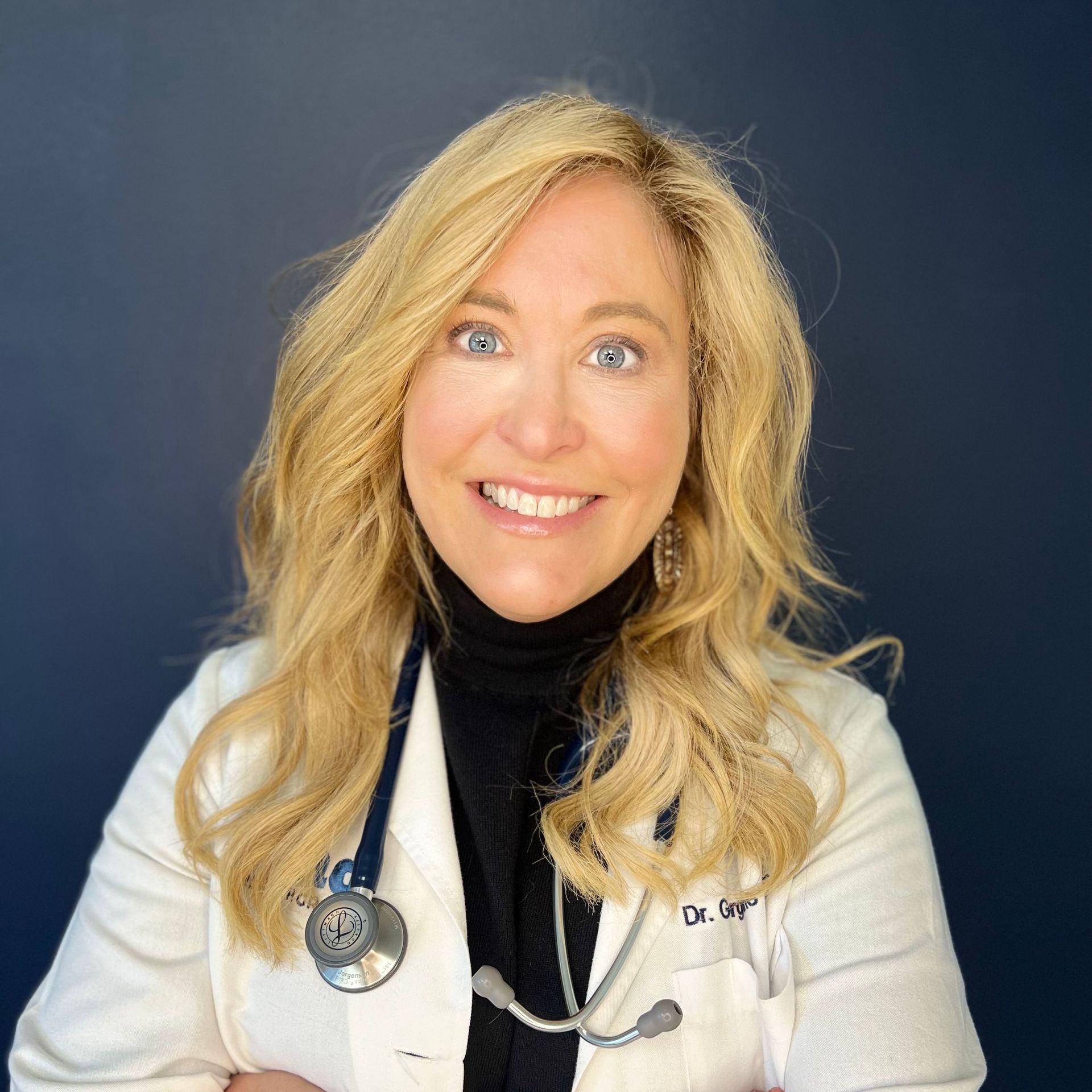
Dr. Georgine Nanos, MD, MPH
Founder of Kind Health Group