When Antidepressants Stop Working: What Your Options Actually Are
Kind Minds TMS. Physician-led brain health, Encinitas, CA. Medically reviewed by Dr. Georgine Nanos, MD, MPH.
Maybe the medication worked once. For a while, it lifted the floor and you could feel yourself again. Then, quietly, it stopped, and now you are taking it every day out of habit and hope, waiting for a version of relief that no longer arrives. Or maybe it never did quite enough, and you have spent years adjusting the dose, switching to the next one, and telling yourself this is simply what "managed" is supposed to feel like.
If either of those is you, read this slowly. What you are describing is common, and it is real. It is also not the end of the road.
You still have options. And one of them is not another prescription.
The Direct Answer: There Is a Non-Drug Path, and It Is Different
There is a treatment for depression that does not involve another medication. It is called TMS, transcranial magnetic stimulation, and it is FDA-cleared for depression that has not responded to medication. Most people have never heard of it, even after years inside the mental health system. That is the gap this article exists to close.
When people ask what their "options" are after antidepressants stop working, the honest list is short. You can adjust the dose or switch drugs again, which is worth trying but often produces the same result through the same mechanism. You can add or deepen therapy, which helps many people and is rarely wasted. Or you can change the mechanism entirely: treat the brain directly instead of routing everything through body chemistry. TMS is that third path.
What TMS Actually Is
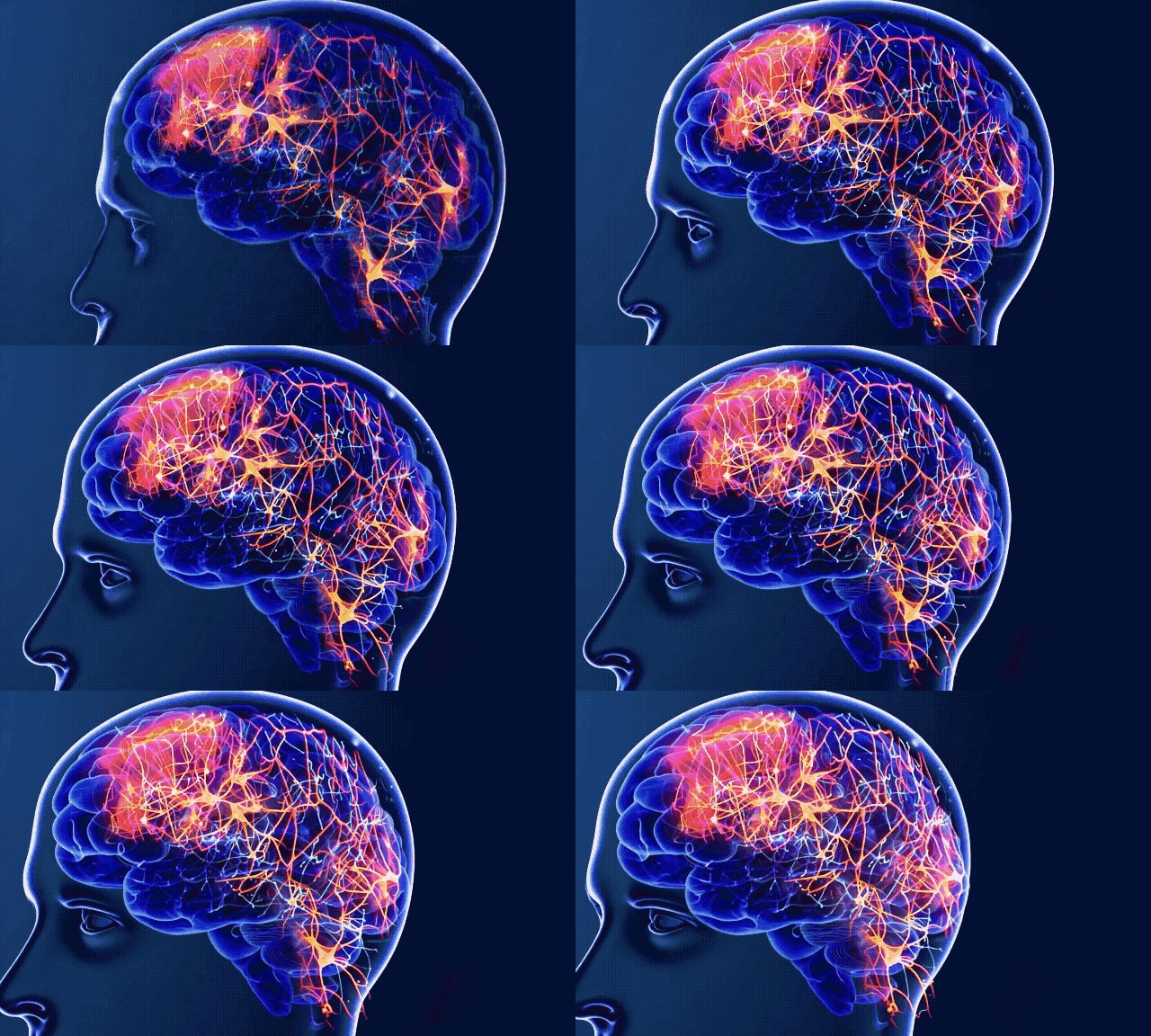
TMS is a non-invasive treatment that uses focused magnetic pulses to activate the specific brain networks involved in mood and motivation, the same regions that go quiet in depression. There is no medication, no sedation, and no downtime. You sit in a chair, awake, and feel a light tapping sensation against your scalp. That is the whole experience.
It helps to think of it less like a drug and more like physical therapy for a specific part of the brain. A medication washes through your entire body to reach your brain, which is why it can bring side effects everywhere else, and why, for many people, the trade-offs eventually outweigh the benefit. TMS works the other direction. It treats the brain directly and leaves the rest of you alone.
Why a Medication Stops Working, and Why That Is Not Your Fault
Antidepressants work by adjusting brain chemistry from the inside. Sometimes that adjustment holds for years. Sometimes it fades: the brain adapts, life circumstances shift, sleep and stress and hormones move, and the same molecule no longer produces the same effect. Doctors sometimes call this a loss of response. It does not mean you did anything wrong, and it does not mean you were imagining the relief you once felt.
And for a significant number of people, medication never quite closed the gap in the first place. Trying a sixth variation of the same mechanism rarely changes that. It is not a failure of effort or willpower. It means the problem was never going to be fully solved by that particular lever.
The word "treatment-resistant" makes it sound like the resistance lives in you. It does not. It means the treatments tried so far did not fit the brain in front of them. A different mechanism can produce a different result.
What the Research Shows
TMS is one of the most studied and best-tolerated treatments in modern psychiatry. It is FDA-cleared for major depressive disorder, and its safety profile is strong: the most common side effects are a mild, temporary headache or scalp tenderness that fades within hours and diminishes after the first few sessions. The risk of a seizure is very low (under 0.1%, comparable to or lower than many antidepressants), and every patient is carefully screened beforehand.
Just as important is what TMS does not do. It does not cause weight gain, sexual side effects, emotional numbing, sedation, or withdrawal, the exact reasons so many people quietly stop taking their medication in the first place.
In our practice, 88% of patients respond to treatment and 72% reach full remission from depression, outcomes that reflect physician-led, individualized care rather than a one-size protocol. The field has also moved quickly: peer-reviewed research now supports accelerated approaches that compress a standard six-week course of TMS into a single intensive day, by working within the brain's natural windows of neuroplasticity.
How Kind Minds Approaches It
Kind Minds is a physician-led brain health practice, not a high-volume TMS clinic. Every patient begins with a comprehensive evaluation of their history, medications, sleep, stress, and cognition, and treatment is directed by a physician and adjusted continuously as the brain responds.
Care is built around ExoMind™ neuromodulation, which allows higher-intensity, precisely targeted stimulation, and may include Kind One-Day TMS™ (the accelerated one-day approach) when it is clinically appropriate. Patients do not choose a protocol. The brain does, and the physician designs care around it.
One more thing worth understanding: we treat depression as something to steward over time, not to discharge after a course of sessions. The brain does not heal on a fixed timeline, so the value is in the year of care that protects the gains, not a single treatment.
What You Can Do Right Now
If your medication has stopped working, or never fully worked, the next step is not automatically another prescription. It is a proper evaluation of whether your brain is a good candidate for neuromodulation.
At Kind Minds, that starts with a Comprehensive Brain Health Consultation, a physician-led clinical evaluation of your history, your goals, and your candidacy for treatment. This is a medical evaluation, not a sales call, and the fee is applied toward your care if you move forward.
A medication losing its effect is not you running out of road. It is one kind of option reaching its limit, and the beginning of another.
Frequently Asked Questions
Why did my antidepressant stop working after years?
It is more common than most people realize. Over time the brain can adapt to a medication, and shifts in sleep, stress, hormones, and health can change how well it holds. This is sometimes called a loss of response. It does not mean the earlier relief was imagined, and it does not mean you did anything wrong. It means the same chemical lever is no longer producing the same effect.
What are my options when medication isn't helping my depression anymore?
Broadly, three. You can adjust the dose or switch medications, which works through the same mechanism and sometimes helps. You can add or deepen therapy. Or you can change the mechanism entirely with a non-drug treatment like TMS, which stimulates the brain's mood circuits directly. A physician can help you weigh which makes sense for your history.
Does TMS work when antidepressants have not?
Often, yes. TMS works through a completely different mechanism than medication, stimulating brain circuits directly rather than altering chemistry throughout the body, which is why it can help people for whom multiple medications have not. In our practice, 88% of patients respond and 72% reach full remission.
Is TMS safe, and what are the side effects?
TMS has one of the strongest safety profiles in psychiatry. The most common side effects are a mild, temporary headache or scalp tenderness that fades within hours. Unlike medication, it does not cause weight gain, sexual side effects, emotional numbing, or withdrawal. The risk of seizure is under 0.1%, and every patient is screened for safety first.
Is TMS covered by insurance?
Most commercial plans and Medicare cover the traditional 36-session TMS protocol for treatment-resistant depression. Accelerated and one-day approaches are generally cash-pay. Kind Minds offers transparent pricing, interest-free payment plans, and HSA/FSA eligibility.
Kind Minds TMS provides physician-led, longitudinal brain care in Encinitas, CA. To learn whether TMS is appropriate for you, book a Comprehensive Brain Health Consultation, a medical evaluation, not a sales call.

Meet the Author
Dr. Georgine Nanos, MD, MPH
Founder of Kind Health Group