TMS for OCD, When the Loop Will Not Stop
Dr. Georgine Nanos, MD, MPH. Founder, Kind Minds TMS. Physician-led brain health, Encinitas, CA.
This is the one I get asked about the least and should get asked about the most.
Because here's the thing about OCD, and I mean the real thing, not the version people mean when they say they're "so OCD" about their spice drawer. Most of the women I see who have it have spent years not calling it that. They call themselves careful. Responsible. A little type A. Somebody who likes things done properly.
And underneath that they are checking the stove four times, and rewriting one email for forty minutes, and lying awake running a conversation from 2019 to see whether they said something unforgivable.
That's not a personality. That's a loop.
What Treatment-Resistant Actually Means Here
The standard path is an SSRI, often at a dose considerably higher than you'd use for depression, plus exposure and response prevention therapy with someone who genuinely knows how to do it. That path works for a lot of people and I want to be clear about that, because ERP in particular is very good and very underused.
And for a meaningful group of people it doesn't get them there. They do the work. They do it properly, for months, with a therapist they like. The loop gets quieter and it does not stop.
When that happens the conversation in most offices turns into another medication trial. A fifth one. A sixth. And the thing I want to say to every woman sitting in that appointment is that a sixth medication trial is not a plan, it's a habit, and you are allowed to ask what else exists. If that sentence landed, this is the longer version of that argument.
Why the Circuitry Question Matters
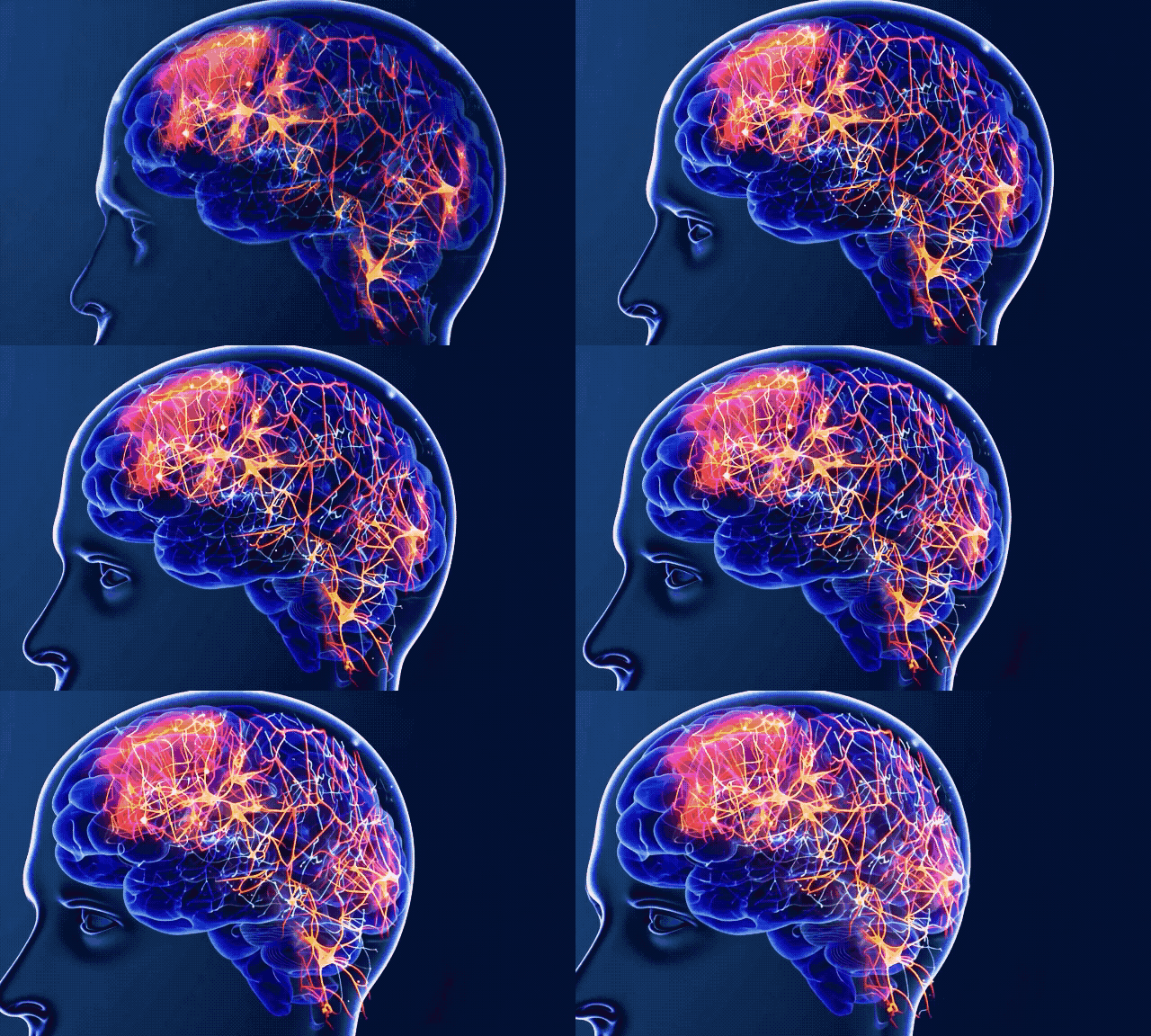
OCD has a reasonably well described circuit involved, the loop running between the cortex, the striatum and the thalamus. That's not a metaphor I'm using to be poetic. It is a physical pathway that behaves differently in OCD.
Which matters because medication works on chemistry, broadly, everywhere, all at once. Neuromodulation works on circuitry, in a targeted place. Those are different tools doing different jobs, and if one has not worked it tells you very little about whether the other will.
At Kind Minds we treat OCD alongside depression and anxiety, and every single person starts the same way: a physician-led brain health consultation with a structured cognitive assessment as a baseline. Not a questionnaire at a front desk. A physician deciding whether this is appropriate for you at all, and screening for the contraindications that make TMS a bad idea for some people, because those exist and they matter.
The Part of This I Actually Care About
OCD is one of the most treatable things I see and one of the most under-treated, and the gap between those two facts is almost entirely shame.
People don't say the intrusive thought out loud. They've had it for eleven years and they've never once said it to another human being, because they think saying it makes it true, or makes them dangerous, or makes them someone who shouldn't be around their own kids.
To anyone reading this with that specific thought sitting in your chest right now: a physician has heard it before. I promise you have not invented a new one. Say it out loud to somebody qualified, because the loop gets weaker every time it survives being spoken, and it gets stronger every year you keep it in.
What You Can Do Right Now
If you've done the SSRI and you've done ERP and you're still counting, still checking, still rewriting, the next step is an evaluation with a physician who treats the circuitry and not only the chemistry. That's a medical evaluation, not a sales call, and it starts by establishing a baseline so there is something real to measure against later.
And if you've never told anyone, start there. Start with saying it. Everything else is a treatment decision, and treatment decisions are the easy part.
You are not a careful person with a quirk. You have a condition with a name, a mechanism, and more than one route out of it.
Frequently Asked Questions
Can TMS treat OCD?
Kind Minds treats OCD with TMS alongside depression and anxiety. Whether it is appropriate for you specifically is decided at a physician-led consultation, which also screens for medical contraindications.
What counts as treatment-resistant OCD?
Clinically it generally describes OCD that has not responded adequately to an appropriate course of SSRI treatment, usually at higher doses than are used for depression, and to exposure and response prevention therapy delivered properly. The exact threshold is a clinical judgment, not a checkbox.
Is TMS for OCD different from TMS for depression?
Targeting differs by condition. The specific protocol used for you is determined at evaluation rather than chosen off a list.
Do I have to stop my medication to try neuromodulation?
No. These are not mutually exclusive, and no medication change should happen without the physician managing it.
I think I might have OCD but I have never been diagnosed. Where do I start?
A physician-led evaluation. Bring the specific thoughts and behaviors, even the ones that feel unspeakable, because those are usually the diagnostic ones.
Kind Minds TMS provides physician-led, longitudinal brain care in Encinitas, CA. To learn whether treatment is appropriate for you, book a Comprehensive Brain Health Consultation, a medical evaluation, not a sales call.
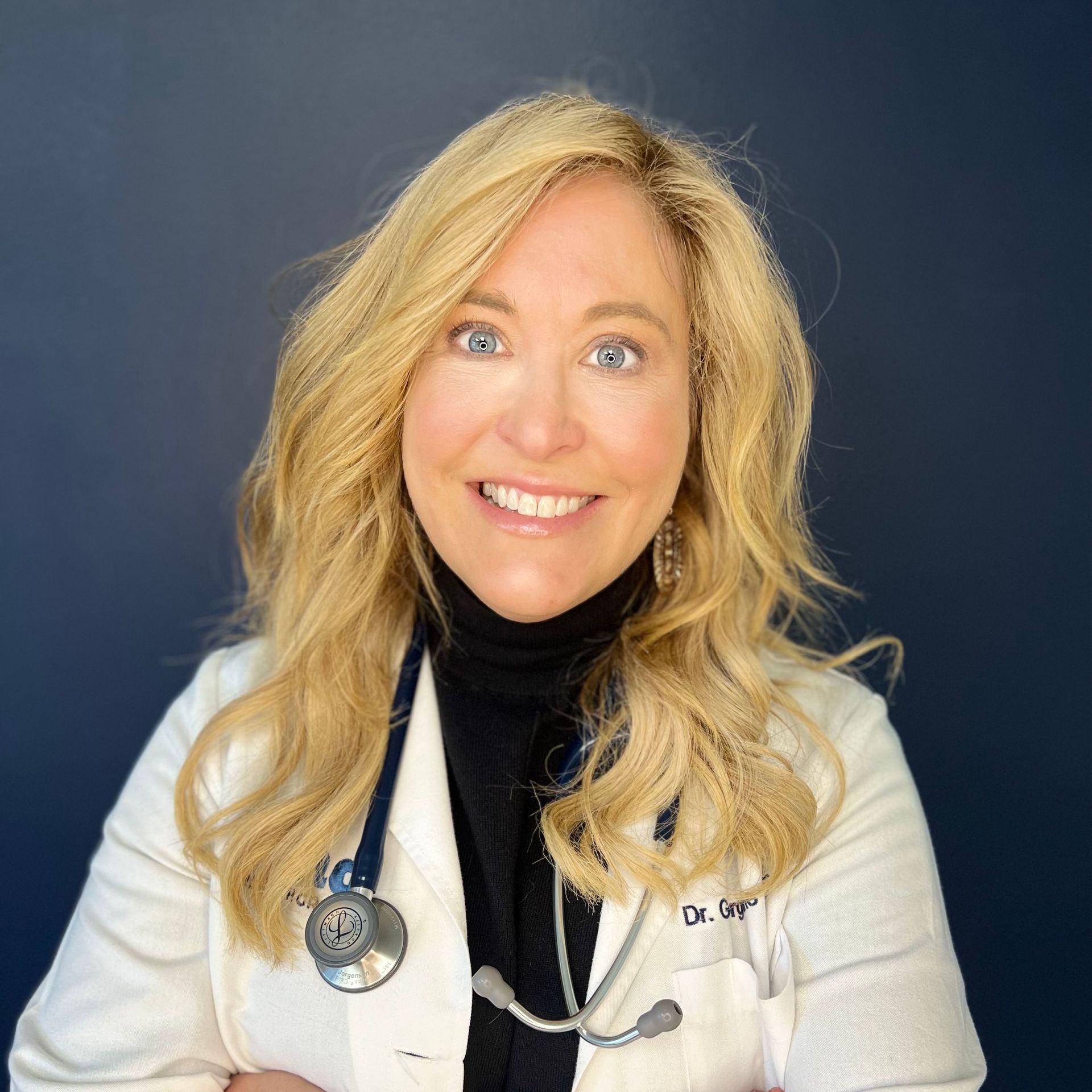
Meet the Author
Dr. Georgine Nanos, MD, MPH
Founder of Kind Health Group