What If Depression Isn't a Chemical Imbalance?
What Are the Best Treatment Options for Depression When 6+ Antidepressants Have Failed?
When you've tried six or more antidepressants without lasting relief, switching to yet another medication offers only a 14.6% response rate, while Transcranial Magnetic Stimulation (TMS) delivers a 37.5% response rate according to a major 2024 study in the American Journal of Psychiatry. You're not broken. You've just been undertreated.
For four decades, we've told one story about depression: you have a chemical imbalance, specifically not enough serotonin. Take this pill, restore the balance, feel better. It was clean, simple, and the foundation of modern psychiatry. And it was wrong.
What the Science Actually Says About Depression Treatment Failure
In 2022, researchers published one of the most comprehensive reviews ever conducted on the serotonin theory of depression. Led by Joanna Moncrieff at University College London, the analysis pooled decades of data and reached a startling conclusion: there is no consistent evidence that depression is caused by low serotonin.
Read that again. The foundational explanation behind the most prescribed class of medications in the world was never definitively proven. This isn't fringe science—it's the consensus emerging from the same neuroscience community that gave us the original theory.
Why Do Antidepressants Stop Working After Multiple Trials?
Of the 280 million individuals globally afflicted with depression, as many as 35% are resistant to readily available medications. When you've failed multiple antidepressant trials, the issue isn't your brain's response to serotonin manipulation—it's that we've been targeting the wrong mechanism entirely.
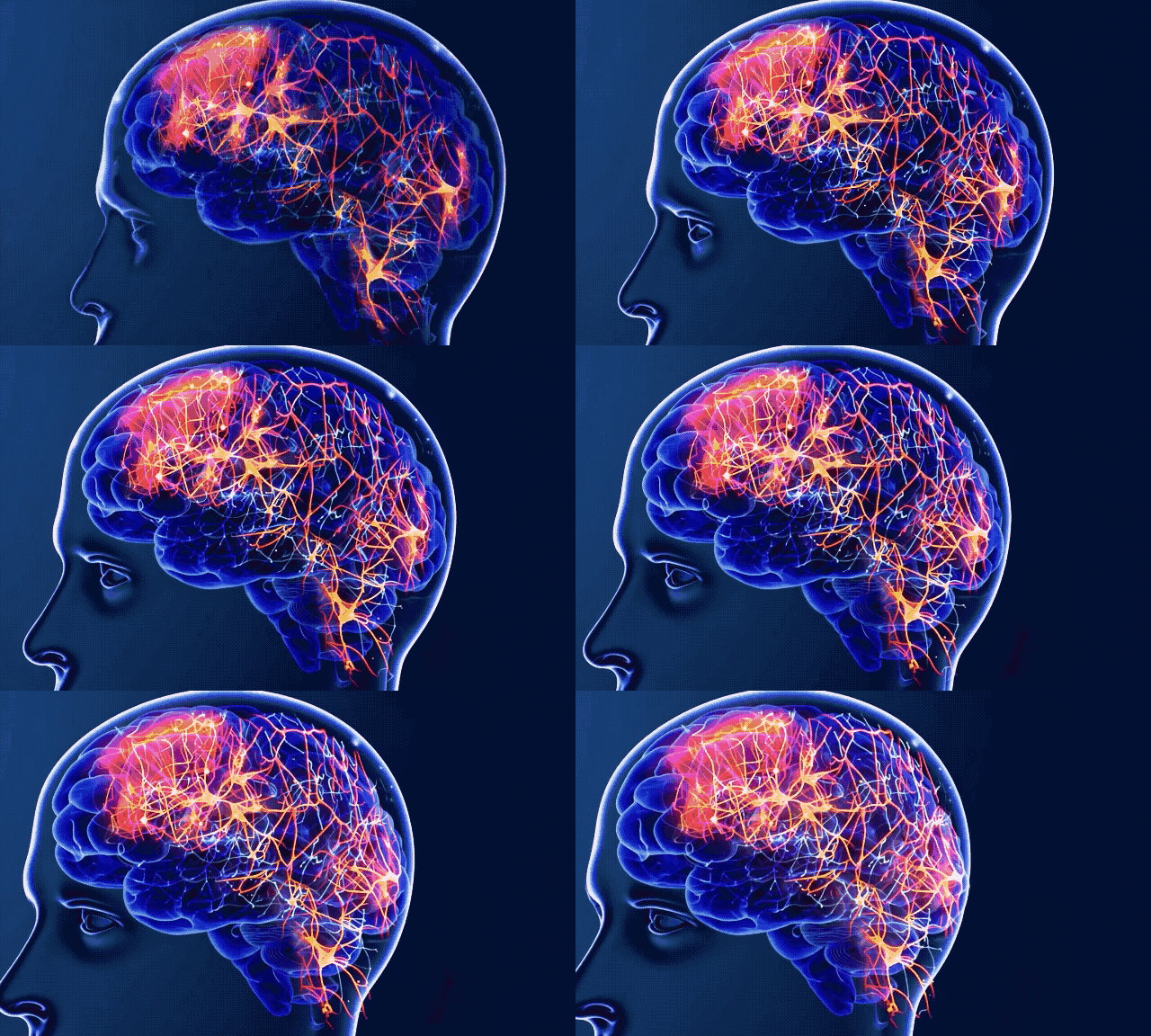
Modern neuroscience shows us that depression is actually a disorder of brain networks, specifically underactive connectivity in the dorsolateral prefrontal cortex (DLPFC)—the region responsible for mood regulation, motivation, and executive function. When that network goes quiet, the result isn't simply sadness. It's the bone-deep fatigue, brain fog, loss of joy, and feeling like you're watching your own life through thick glass.
It's also a disorder of impaired neuroplasticity—the brain's ability to form new connections, adapt, and heal. Chronic stress, trauma, and prolonged depression all dampen this capacity, trapping the brain in dysfunctional patterns that medication alone rarely addresses.
What Are the Evidence-Based Treatment Options After Medication Failure?
Transcranial Magnetic Stimulation (TMS)
TMS has been consistently recommended in international guidelines as first-line for treatment-resistant depression, due to its superior efficacy over the next antidepressant, with minimal side effects. Unlike medications that target serotonin, TMS directly addresses the brain network dysfunction causing your symptoms.
Clinical evidence shows response rates of 50-60% and remission rates of 30-40% in treatment-resistant depression populations. For context, this compares to approximately 33% remission rate for SSRIs from the landmark STAR*D study.
How TMS Works Differently:
Using precise magnetic pulses, TMS reawakens the underperforming DLPFC, restores network connectivity, and reignites neuroplasticity. No medication, no sedation, no systemic side effects.
Accelerated TMS Protocols
The Stanford SAINT protocol has shown remarkable results, with 79% of participants achieving remission within 5 days of treatment, and 90.48% showing treatment response immediately following treatment. Unlike traditional TMS delivered over 6-12 weeks, accelerated protocols can produce results in as little as 1-2 weeks.
The Kind Minds Advantage:
Our KIND One-Day TMS™ Protocol represents the evolution of accelerated treatment—delivering the equivalent of weeks of traditional therapy in a single day, designed specifically for high-achieving women who can't take 6-7 weeks away from their responsibilities.
Ketamine-Assisted Therapy
The FDA approval of ketamine nasal spray for treatment-resistant depression marked a breakthrough, working through the glutamate system and promoting neuroplasticity rather than targeting monoamine neurotransmitter systems. Combination therapy of ketamine and TMS is emerging as an option for major depressive disorder unresponsive to either treatment alone.
When Should You Consider These Options?
The primary criterion for advanced treatment consideration is treatment-resistant depression—specifically, insufficient response to at least two adequate trials of antidepressant medications, with "adequate" meaning therapeutic doses for 6-8 weeks duration.
If this describes your experience, you're not treatment-resistant. You've never received the right treatment.
How Do You Choose the Right Treatment Path?
Consider TMS if:
- You've failed 2+ adequate medication trials
- You experience cognitive side effects from medications
- You need to maintain full function during treatment
- You want to avoid systemic medication effects
Consider Accelerated Protocols if:
- Traditional 6-week timelines are impossible for your schedule
- You need faster relief for severe symptoms
- You're willing to commit to intensive treatment over shorter periods
Consider Combination Approaches if:
- Single interventions haven't provided complete relief
- You have complex, treatment-resistant presentations
- You're working with a physician who specializes in treatment-resistant cases
What Should You Expect from Advanced Depression Treatment?
A 2024 continuation therapy study found that 86% of participants maintained remission over 12 months when retreatment was triggered by early warning signs, with most retreatment courses requiring only 1-2 days.
This means potentially staying well with just a couple of treatment days every few months—rather than daily medications, weekly therapy sessions, or the revolving door of medication trials.
Why Timing Matters in Treatment-Resistant Depression
Treatment-resistant depression is not only difficult to bring to remission but is also prone to relapse. The longer your brain remains in dysfunctional patterns, the more entrenched those patterns become. Early intervention with effective treatments like TMS can prevent this deterioration.
Patients under 65, those with shorter duration of current depressive episodes, and individuals without significant medical comorbidities tend to respond more favorably to TMS therapy.
FAQ: Treatment Options After Multiple Medication Failures
Q: How many antidepressants should I try before considering other options?
A: Treatment-resistant depression is commonly defined as inadequate response to two or more antidepressant trials. After two failed adequate trials, your odds of success with a third medication drop significantly. This is when evidence-based alternatives like TMS should be strongly considered.
Q: Can I do TMS while still taking my current medications?
A: Yes, TMS does not require stopping current medications. Many people receive TMS while continuing their existing prescriptions, and the PCORI-funded ASCERTAIN study found adding TMS to current antidepressants more effective than switching medications.
Q: How long do the effects of advanced treatments last?
A: Without maintenance treatment, 47% of TMS patients maintained remission at 3 months, with median wellness duration of about 3.5 months. With personalized maintenance protocols, success rates improve dramatically.
Q: What makes some people treatment-resistant to medications?
A: You're not "treatment-resistant"—you're under-treated. Depression involves brain network dysfunction that medication alone often can't address. TMS directly targets these networks, which is why it works when medications have failed.
Q: Are accelerated protocols as effective as traditional schedules?
A: Studies show 90.48% treatment response immediately following accelerated treatment, with 86.4% meeting remission criteria and 70% maintaining response one month later. The key is proper patient selection and protocol design.
You didn't fail the medications. The medications failed you. There is another way forward.
Wondering if TMS could be right for you? Take our 2-minute candidacy assessment to find out.

Meet the Author
Dr. Georgine Nanos, MD, MPH
Founder of Kind Health Group